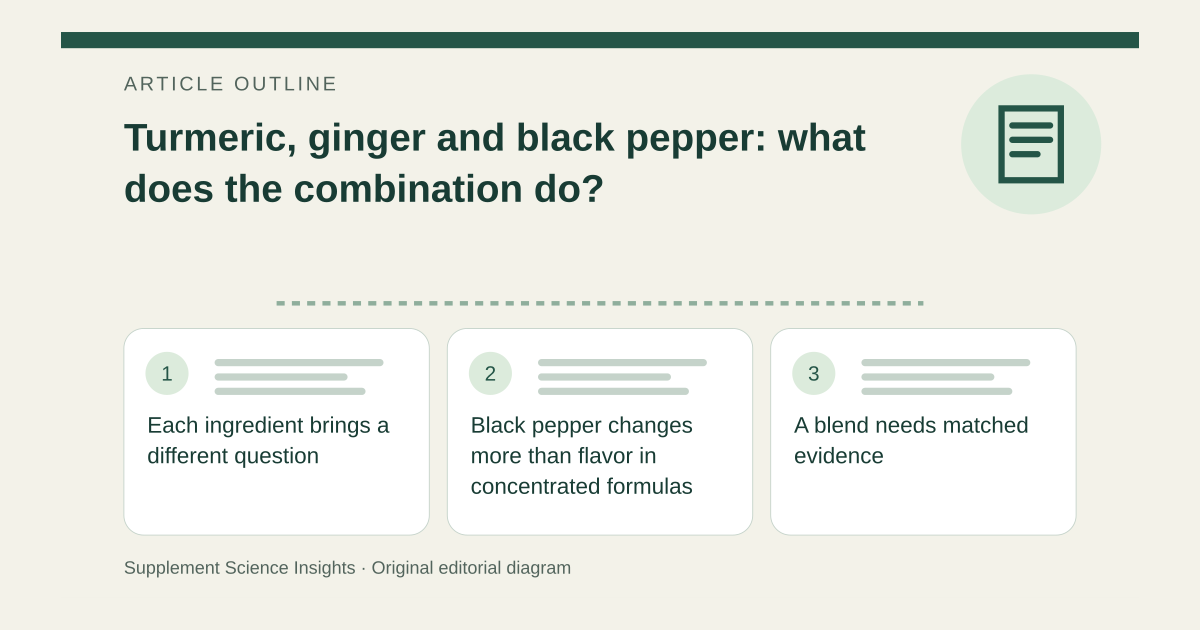
Each ingredient brings a different question
Ginger research includes certain nausea and menstrual-symptom outcomes, usually with supplements. Turmeric studies examine different conditions and formulations. Neither body of evidence proves that combining both in a kitchen drink provides the same effect or an additional benefit. [1][2]
Black pepper changes more than flavor in concentrated formulas
NCCIH describes piperine as one way to increase curcumin bioavailability. That is an exposure effect, not proof of better symptoms or safer use. A culinary pinch of pepper also cannot be treated as an exact equivalent to the standardized piperine amount in a capsule. [2]
A blend needs matched evidence
A meaningful claim should identify the actual formulation, amounts, population, duration and measured outcome. An ingredient list with three familiar names does not establish synergy. No universal daily mixture or ratio follows from the general summaries inspected here. [1][2]
Consider tolerance and medicines
Ginger can cause heartburn, diarrhea or mouth irritation. Turmeric can also cause gastrointestinal symptoms, and some enhanced formulations have been associated with liver injury. Review concentrated combinations alongside medicines rather than assuming that three food ingredients remain harmless at any dose. [1][2]
Keep the culinary purpose clear
Imagine a soup tastes better with ginger, turmeric and pepper. That is a valid food use without claiming it replaces treatment for joint pain or nausea. If the goal changes to treating a condition, the formulation and evidence need a separate assessment. [1][2]
| Feature | What it supports |
|---|---|
| Seasoning blend | Flavor and color |
| Piperine enhancement | Altered curcumin exposure |
| Individual ingredient study | Not proof of the finished mixture |
| Concentrated daily use | Requires benefit and safety review |
Sources for this article
- Ginger: Usefulness and Safety | NCCIH
Source consulted: 2026-09-21. This is a reference resource, not a claim that we conducted the studies or tested a product. - Turmeric: Usefulness and Safety | NCCIH
Source consulted: 2026-09-21. This is a reference resource, not a claim that we conducted the studies or tested a product.