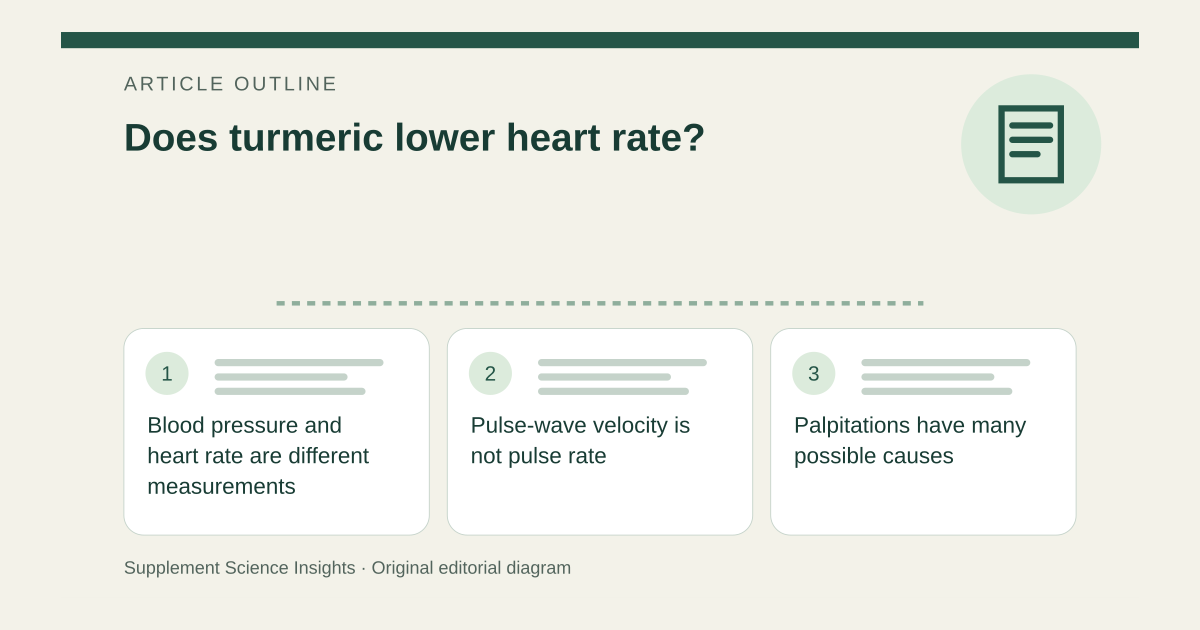
Blood pressure and heart rate are different measurements
Blood pressure describes pressure in the circulation; heart rate is the number of beats per minute. Curcumin reviews reporting blood-pressure changes do not establish a reliable heart-rate-lowering effect. A lower pressure reading cannot be used as evidence that an abnormal rhythm has been treated. [1][2]
Pulse-wave velocity is not pulse rate
Some vascular studies report pulse-wave velocity, a measure related to how a pressure wave travels through arteries. Despite the word pulse, it is not the number of heartbeats per minute. A favorable result on that endpoint does not validate turmeric as a rate-control medicine. [3]
Palpitations have many possible causes
NHS guidance lists exercise, stress, poor sleep, caffeine, alcohol and medicines among common contributors. Anemia, thyroid problems and heart rhythm conditions can also be involved. Recurrent or prolonged symptoms may need an ECG and cause-specific treatment rather than a supplement intended to slow the heart. [2]
Do not replace or adjust a heart medicine
There is no established turmeric dose for rate control in the evidence reviewed here. Discuss supplements with the clinician and keep prescribed medicine changes supervised. Product formulation and liver or gastrointestinal adverse effects remain relevant even when the goal is cardiovascular health. [4][2]
Treat accompanying symptoms as the priority
Imagine a racing heartbeat occurs with chest pain, breathlessness or faintness. Seek emergency care rather than waiting for turmeric to work. If those symptoms have stopped, urgent medical advice is still appropriate; a normal later pulse does not explain the episode. [2]
| Term | Meaning |
|---|---|
| Heart rate | Beats per minute |
| Blood pressure | Pressure in the circulation |
| Pulse-wave velocity | Wave travel through arteries |
| Palpitations with chest pain | Emergency assessment |
Sources for this article
- Curcumin/turmeric supplementation could improve blood pressure and endothelial function: A grade-assessed systematic review and dose-response meta-analysis of randomized controlled trials.
Source consulted: 2026-09-21. This is a reference resource, not a claim that we conducted the studies or tested a product. - Heart palpitations - NHS
Source consulted: 2026-09-21. This is a reference resource, not a claim that we conducted the studies or tested a product. - The effect of curcumin supplementation on endothelial function and blood pressure in patients with metabolic disorders: A meta-analysis of meta-analyses.
Source consulted: 2026-09-21. This is a reference resource, not a claim that we conducted the studies or tested a product. - Turmeric: Usefulness and Safety | NCCIH
Source consulted: 2026-09-21. This is a reference resource, not a claim that we conducted the studies or tested a product.