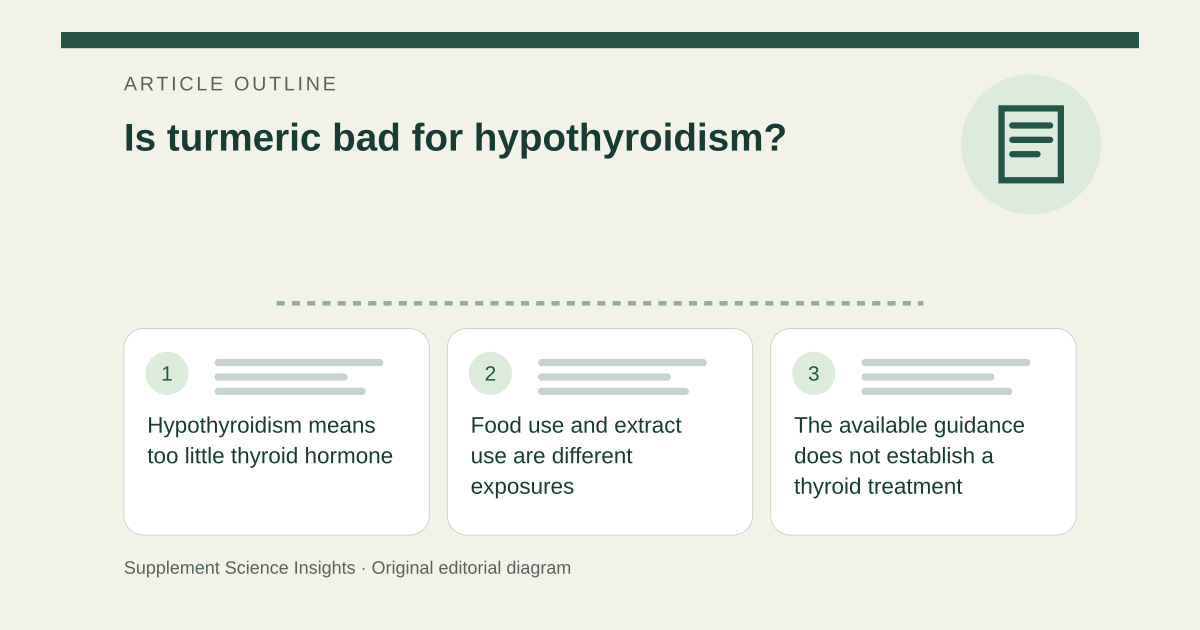
Hypothyroidism means too little thyroid hormone
An underactive thyroid can cause fatigue, feeling cold, constipation, dry skin and weight changes. NHS guidance describes blood testing and replacement of the hormone the body cannot produce, usually with levothyroxine. General anti-inflammatory claims do not establish that a supplement corrects this hormone deficit. [1]
Food use and extract use are different exposures
MSK distinguishes turmeric used in food from stronger supplements. NCCIH notes considerable differences in curcumin content and absorption-enhancing ingredients. A tolerable amount in a meal cannot establish the safety of a daily concentrated extract, but concerns about extracts do not prove that every turmeric-containing meal is harmful. [2][3]
The available guidance does not establish a thyroid treatment
NCCIH finds insufficient evidence for definitive benefit across many promoted uses. The sources here do not establish turmeric as treatment for hypothyroidism or Hashimoto disease. A biological mechanism described in laboratory work would not establish improved thyroid function, symptoms or reduced medicine needs in people. [3][1]
Watch the product and the treatment routine
Tell the pharmacist about the exact supplement, particularly combination formulas. Keep levothyroxine administration and thyroid monitoring consistent. Turmeric supplements also have risks unrelated to the thyroid, including stomach upset and reported liver injury with some formulations. [4][3]
Do not interpret persistent fatigue as a turmeric deficiency
Imagine fatigue continues despite a supplement marketed for inflammation. Review thyroid control and other possible causes with the clinician. Increasing turmeric is not a substitute for checking whether hormone replacement and the diagnosis are appropriate. [1]
| Question | Practical distinction |
|---|---|
| Turmeric in a meal | Not equivalent to concentrated extract |
| Treatment for low thyroid hormone | Established hormone replacement |
| Persistent symptoms | Need assessment rather than escalating supplements |
| New herbal product | Review ingredients and medicines |
Sources for this article
- Underactive thyroid (hypothyroidism) - NHS
Source consulted: 2026-09-21. This is a reference resource, not a claim that we conducted the studies or tested a product. - Turmeric | Memorial Sloan Kettering Cancer Center
Source consulted: 2026-09-21. This is a reference resource, not a claim that we conducted the studies or tested a product. - Turmeric: Usefulness and Safety | NCCIH
Source consulted: 2026-09-21. This is a reference resource, not a claim that we conducted the studies or tested a product. - Levothyroxine: a medicine for an underactive thyroid (hypothyroidism) - NHS
Source consulted: 2026-09-21. This is a reference resource, not a claim that we conducted the studies or tested a product.