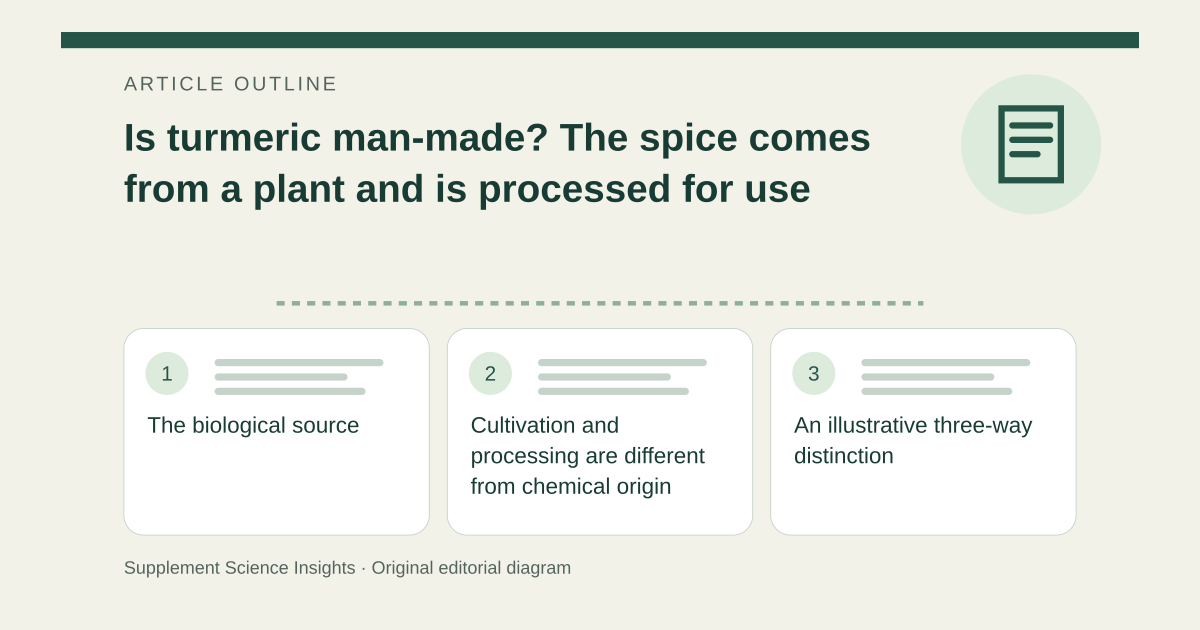
The biological source
NCCIH describes turmeric as a plant in the ginger family whose rhizome is used for culinary purposes. ICAR lists Curcuma longa as a spice crop. Curcumin is one of the constituents associated with its yellow color. These are botanical and chemical identities, separate from a brand’s finished formulation. [1][2]
Cultivation and processing are different from chemical origin
People grow, harvest and process turmeric into products such as culinary powders and extracts. A capsule may also include other ingredients or concentrate selected constituents. The fact that a product is plant-derived does not establish that it is minimally processed, contaminant-free or clinically effective. Read its actual specification. [1]
An illustrative three-way distinction
Imagine comparing a fresh rhizome, a jar of turmeric spice and a standardized curcumin capsule. They share a botanical connection but differ in preparation and composition. Do not substitute equal spoonfuls or assume the capsule’s study evidence applies directly to the spice. Natural source and preparation strength answer different questions. [1]
| Hypothetical product | Description |
|---|---|
| Fresh turmeric rhizome | Plant part |
| Ground culinary turmeric | Processed spice |
| Concentrated curcumin preparation | Different constituent concentration and formula |
Sources for this article
- Turmeric: Usefulness and Safety | NCCIH
Source consulted: 2026-09-20. This is a reference resource, not a claim that we conducted the studies or tested a product. - ICAR-AICRP on Spices
Source consulted: 2026-09-20. This is a reference resource, not a claim that we conducted the studies or tested a product.