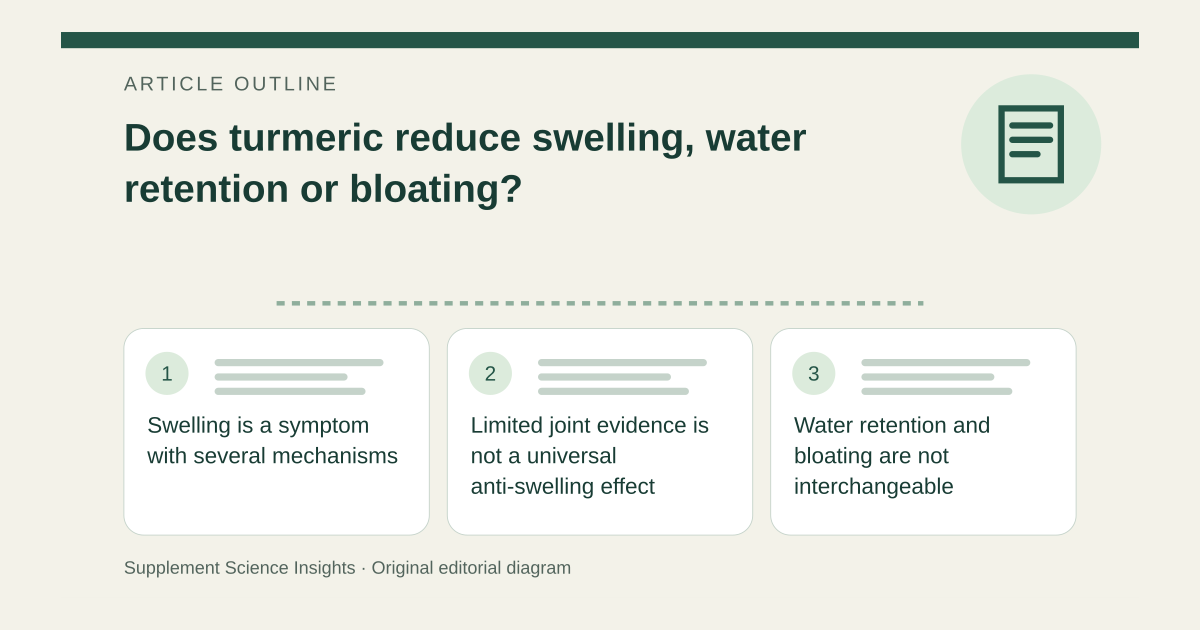
Swelling is a symptom with several mechanisms
An injured joint, fluid-filled ankles and a gas-filled abdomen may all be described as swollen. NHS guidance lists medicines, prolonged sitting or standing, vein problems and heart, kidney or liver conditions among causes of edema. A general claim about curcumin and inflammation does not identify or treat those causes. [1]
Limited joint evidence is not a universal anti-swelling effect
NCCIH describes preliminary favorable findings for some osteoarthritis symptoms while noting study limitations. That does not establish turmeric as a diuretic or prove that it removes excess body fluid. There is no validated all-purpose dose for unexplained swelling in the guidance reviewed here. [2][1]
Water retention and bloating are not interchangeable
Edema involves fluid in tissues; common bloating involves gas or digestive problems such as constipation or food intolerance. Turmeric is not a dependable treatment for either simply because the abdomen or legs look larger. Oral turmeric can itself cause digestive upset, reflux or diarrhea. [1][3][2]
Choose care according to the cause
For uncomplicated leg swelling, gentle movement and elevation may help, but persistent or worsening symptoms need assessment. For bloating, meal patterns, gas-producing foods and constipation may be relevant. Do not self-prescribe a supplement instead of reviewing a medicine effect or an underlying illness. [1][3]
Some swelling needs prompt attention
Unexplained one-sided leg swelling, sudden severe swelling, redness, heat or fever warrants urgent assessment. Swelling with breathlessness, chest pain or coughing blood needs emergency care. Likewise, a suddenly very painful swollen abdomen or severe breathing difficulty is not a reason to test a turmeric drink. [1][3]
Compare symptoms, not just the word swelling
Imagine abdominal fullness improves after a bowel movement while ankle swelling continues. The first change does not show that body-fluid retention has resolved. Track the location and accompanying symptoms so care addresses the actual problem. [1][3]
| Description | Possible issue |
|---|---|
| Puffy ankles or legs | Tissue-fluid accumulation |
| Full, gassy abdomen | Digestive bloating |
| Painful inflamed joint | Joint-specific condition |
| One symptom improves | Does not prove the others resolved |
Sources for this article
- Swollen ankles, feet and legs (oedema) - NHS
Source consulted: 2026-09-21. This is a reference resource, not a claim that we conducted the studies or tested a product. - Turmeric: Usefulness and Safety | NCCIH
Source consulted: 2026-09-21. This is a reference resource, not a claim that we conducted the studies or tested a product. - Bloating - NHS
Source consulted: 2026-09-21. This is a reference resource, not a claim that we conducted the studies or tested a product.