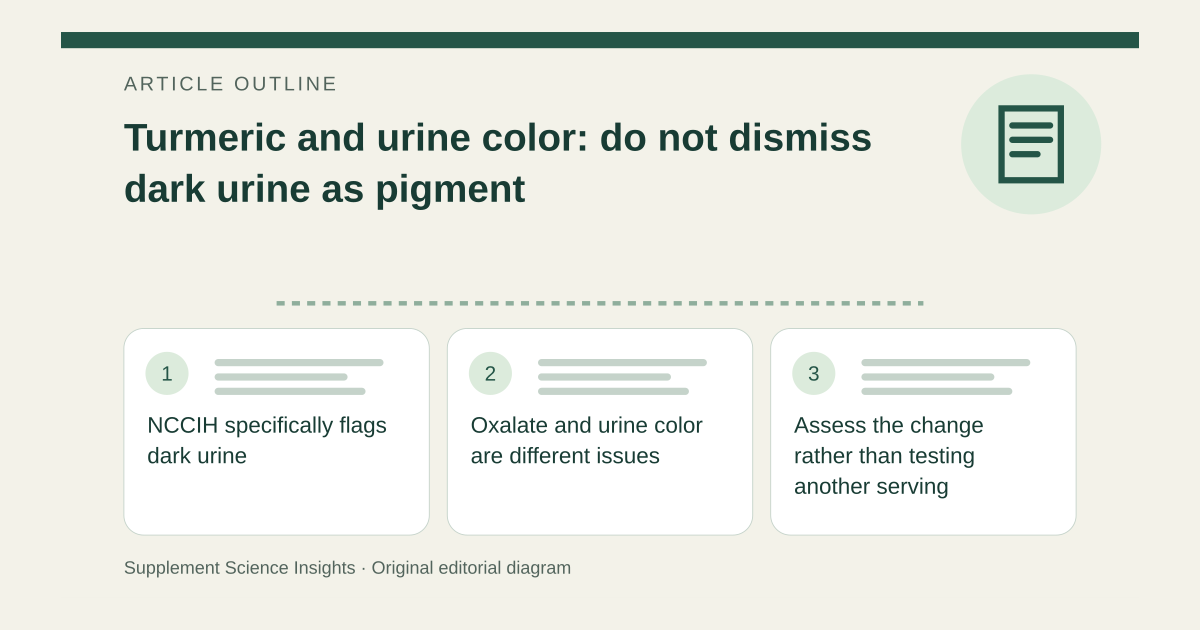
NCCIH specifically flags dark urine
NCCIH reports liver injury with some turmeric or curcumin products and advises stopping them and contacting a health professional if symptoms such as fatigue, nausea, poor appetite, dark urine or jaundice occur. The yellow spice color should not override that warning. [1]
Oxalate and urine color are different issues
The National Kidney Foundation lists turmeric supplements among products that may provide high oxalate. Stone prevention depends on the person’s stone type and urine assessment. Looking at urine color cannot measure urinary oxalate or confirm a kidney stone. [2]
Assess the change rather than testing another serving
Imagine urine becomes tea-colored during a new curcumin regimen. Stop the supplement and seek assessment rather than taking another dose to see whether the color deepens. MedlinePlus also advises review for unexplained persistent discoloration, blood in urine or clear dark-brown urine. [1][3]
| Observation | Appropriate distinction |
|---|---|
| Bright-colored spice | Not proof of harmless urine discoloration |
| Urinary oxalate | Requires appropriate measurement |
| Dark urine with jaundice | Possible liver warning |
Sources for this article
- Turmeric: Usefulness and Safety | NCCIH
Source consulted: 2026-09-20. This is a reference resource, not a claim that we conducted the studies or tested a product. - Calcium Kidney Stones | National Kidney Foundation
Source consulted: 2026-09-20. This is a reference resource, not a claim that we conducted the studies or tested a product. - Urine - abnormal color: MedlinePlus Medical Encyclopedia
Source consulted: 2026-09-20. This is a reference resource, not a claim that we conducted the studies or tested a product.