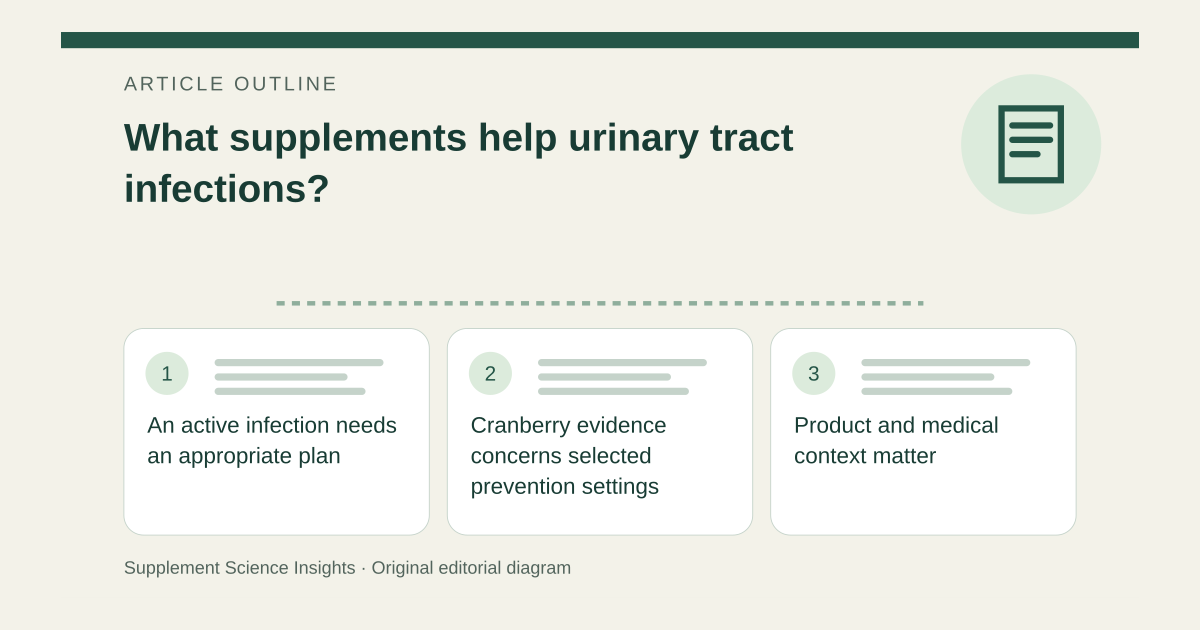
An active infection needs an appropriate plan
NIDDK describes antibiotics for bacterial bladder infection, chosen for the organism and patient context. Not all urinary symptoms are bacterial infection, so testing and assessment can change the treatment. Do not delay care while trying a supplement. [1]
Cranberry evidence concerns selected prevention settings
NCCIH describes possible reduction in recurrent symptomatic UTIs in some women, with inconsistent findings across products and populations. It specifically advises against using cranberry to treat an existing infection. A prevention finding does not validate every capsule or juice. [2]
Product and medical context matter
Processing can change cranberry proanthocyanidin content, and the best preparation is not established for everyone. Review use with medicines such as warfarin and during pregnancy. For recurrent infection, discuss the broader prevention plan rather than relying only on a retail product. [2]
Hydration is supportive, not an antibiotic substitute
Imagine burning urination continues while someone drinks cranberry juice. Seek assessment and follow the prescribed plan. Fluid advice should account for kidney or heart conditions that limit intake; more liquid is not always appropriate. [1]
| Question | Practical interpretation |
|---|---|
| Current UTI | Assessment and appropriate treatment |
| Cranberry | Possible prevention in some settings |
| Different product | Evidence may not transfer |
| Fluid restriction | Individual hydration advice |
Sources for this article
- Treatment for Bladder Infection in Adults - NIDDK
Source consulted: 2026-09-21. This is a reference resource, not a claim that we conducted the studies or tested a product. - Cranberry: Usefulness and Safety | NCCIH
Source consulted: 2026-09-21. This is a reference resource, not a claim that we conducted the studies or tested a product.