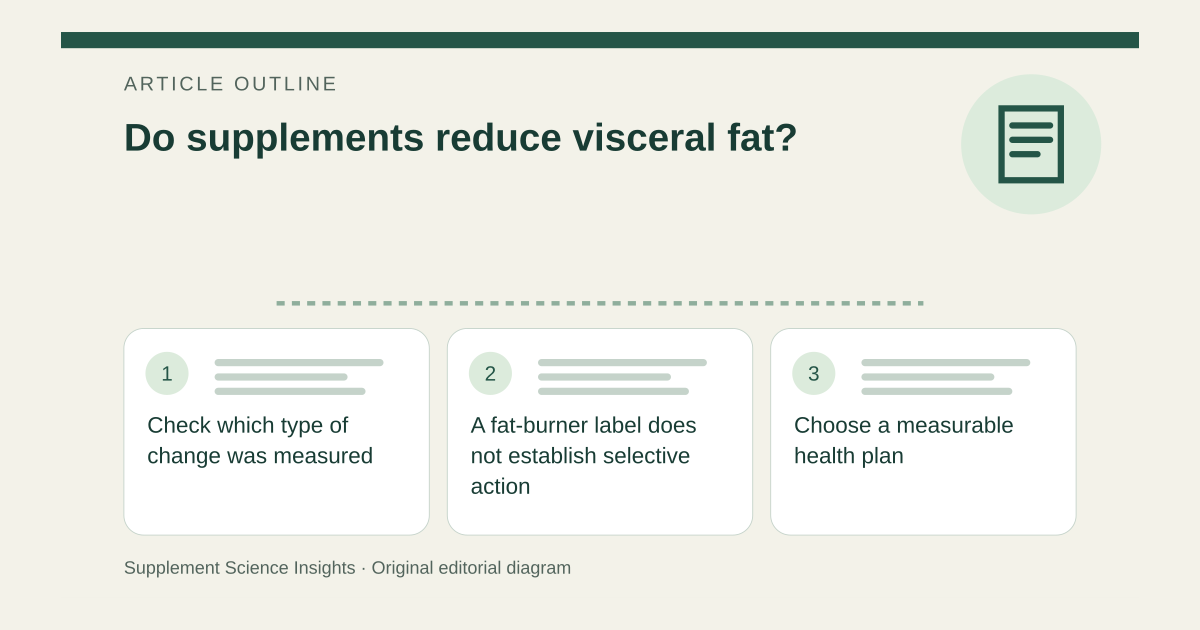
Check which type of change was measured
A visceral-fat claim needs a relevant measurement and a controlled comparison. Scale weight includes water and other tissues; waist size can change for several reasons. ODS describes small, short and mixed-ingredient weight-loss studies that often cannot support strong claims about a finished product. [1]
A fat-burner label does not establish selective action
Stimulants, laxative effects or appetite changes should not be interpreted as targeted loss of internal fat. Supplements can have adverse effects and interactions. A treatment that changes weight is also not automatically suitable for everyone with a large waist or metabolic risk. [1]
Choose a measurable health plan
Imagine a product promises a flatter stomach in a week. Ask whether its evidence measured visceral tissue rather than temporary bloating. NIDDK recommends a sustainable eating, activity and support plan with follow-up; medical risk factors may also call for clinician-directed treatment. [2]
| Question | Interpretation |
|---|---|
| Scale change | Not a visceral-fat measurement |
| Less bloating | Different outcome |
| Targeted fat claim | Needs relevant controlled evidence |
Sources for this article
- Dietary Supplements for Weight Loss - NIH ODS Consumer
Source consulted: 2026-09-21. This is a reference resource, not a claim that we conducted the studies or tested a product. - Choosing a Safe & Successful Weight-loss Program - NIDDK
Source consulted: 2026-09-21. This is a reference resource, not a claim that we conducted the studies or tested a product.