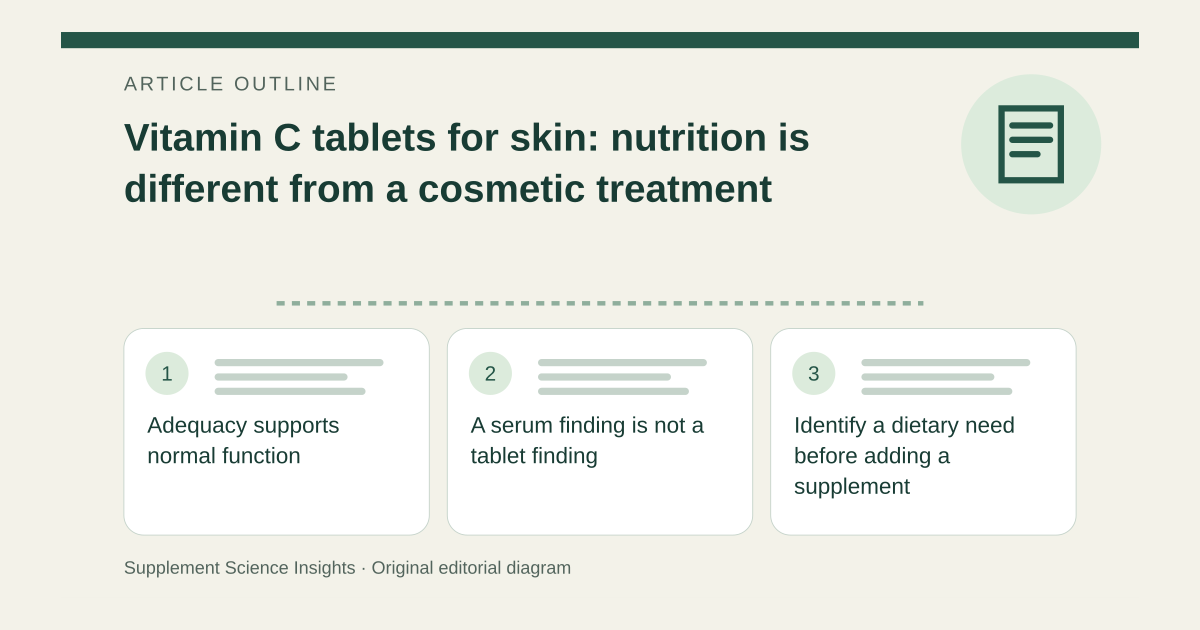
Adequacy supports normal function
ODS identifies vitamin C as necessary for collagen synthesis. Severe deficiency causes scurvy, including poor wound healing and characteristic skin findings. Correcting a deficiency is a nutritional treatment; it should not be equated with giving large doses to everyone seeking a cosmetic change. [1]
A serum finding is not a tablet finding
A topical formulation delivers an ingredient through a different route. The skin-health review discusses differences in delivery and the evidence base. Results for a particular topical preparation cannot establish that a tablet produces the same concentration in skin or the same visible result. [2]
Identify a dietary need before adding a supplement
AAD advises an individualized approach to supplements for skin. Foods can provide vitamin C; whether a tablet is useful depends on intake and circumstances. A change in pigmentation, a persistent wound or a new skin lesion should not automatically be diagnosed as a vitamin shortage. [3][1]
Higher amounts can add harms without proving benefit
ODS lists diarrhea, nausea and abdominal cramps among effects of excessive intake. Its adult upper limit is 2,000 mg daily, with lower limits for children; that ceiling is not a skin-treatment dose. Relevant medical conditions and medicines should be reviewed before high-dose use. [1]
Evaluate the claim against the actual problem
Imagine someone eating adequate vitamin C buys a high-dose tablet for a new dark patch. The nutrient’s role in collagen does not establish that this is the right treatment. Assess the skin concern and nutritional context instead of increasing the dose until a cosmetic promise is met. [1][3]
| Situation | Evidence needed |
|---|---|
| Documented deficiency | Appropriate nutritional replacement |
| Adequate intake and wrinkles | Relevant oral intervention evidence |
| Changing skin lesion | Clinical assessment |
Sources for this article
- Vitamin C - Health Professional Fact Sheet
Source consulted: 2026-09-21. This is a reference resource, not a claim that we conducted the studies or tested a product. - The Roles of Vitamin C in Skin Health - PMC
Source consulted: 2026-09-21. This is a reference resource, not a claim that we conducted the studies or tested a product. - Should I take vitamins or supplements for my skin?
Source consulted: 2026-09-21. This is a reference resource, not a claim that we conducted the studies or tested a product.