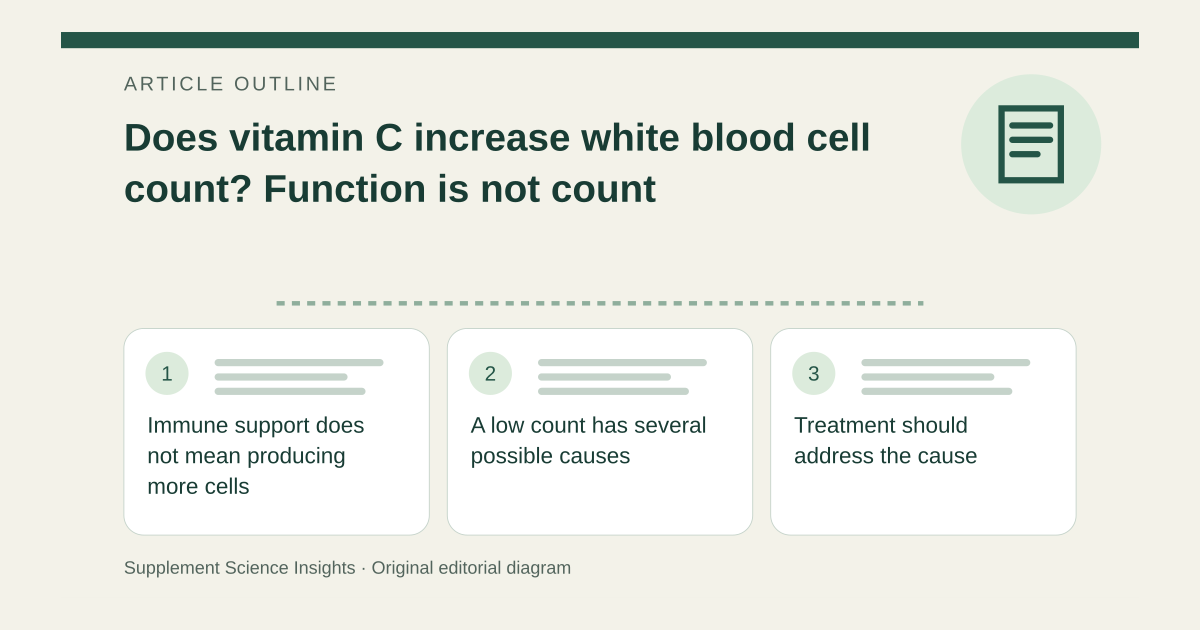
Immune support does not mean producing more cells
NIH describes vitamin C as important to normal immune physiology. That nutritional role does not provide a predictable rise in a blood count from taking extra vitamin C. Deficiency correction and treatment of neutropenia or another low-count condition are separate clinical questions. [1][2]
A low count has several possible causes
NHS lists medicines, cancer treatment, some infections, autoimmune conditions and certain cancers among causes. A blood test identifies the count, but the result must be interpreted with the medical history and other findings. Do not assume the cause is low vitamin C. [3]
Treatment should address the cause
Care may include treatment of an infection, changes to a causative medicine under supervision or specific measures to raise cells. Do not stop prescribed medicine independently or use a vitamin supplement in place of that assessment. Infection symptoms in someone with a low count deserve prompt advice from the care team. [3]
Read an immune claim precisely
Imagine a bottle says supports immune function and a person expects it to normalize a low neutrophil count. The label claim does not establish that outcome. Bring the blood result and the supplement to the clinician and clarify what is being treated and monitored. [1][3]
| Term | Meaning |
|---|---|
| Adequate vitamin C | Supports normal nutritional needs |
| White blood cell count | Laboratory measure of cell number |
| Low count with infection symptoms | Needs clinical advice |
| Immune-support label | Not proof of count normalization |
Sources for this article
- Vitamin C - Health Professional Fact Sheet
Source consulted: 2026-09-21. This is a reference resource, not a claim that we conducted the studies or tested a product. - Dietary Supplements for Immune Function and Infectious Diseases - NIH ODS
Source consulted: 2026-09-21. This is a reference resource, not a claim that we conducted the studies or tested a product. - Low white blood cell count - NHS
Source consulted: 2026-09-21. This is a reference resource, not a claim that we conducted the studies or tested a product.