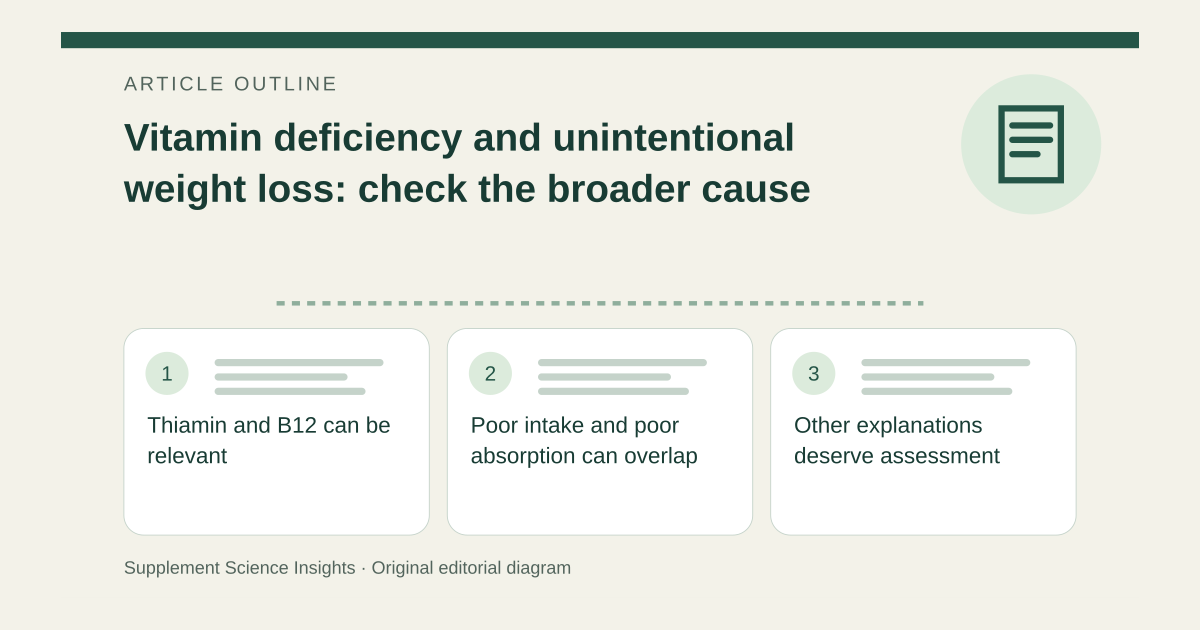
Thiamin and B12 can be relevant
ODS lists loss of appetite and weight loss among possible thiamin-deficiency features, and weight loss among B12-deficiency manifestations. These are possible associations within a larger clinical picture; neither vitamin can be diagnosed as low from a change on the scale alone. [1][2]
Poor intake and poor absorption can overlap
A person eating too little may lose weight and become deficient in several nutrients. Digestive conditions can also affect both nutrition and weight. Correcting one vitamin does not necessarily restore enough energy and protein or treat the underlying absorption problem. [3][2][4]
Other explanations deserve assessment
NHS guidance lists stress, mental health conditions, digestive disorders, overactive thyroid, diabetes, medicine effects and other illnesses among possible causes. Persistent unintentional loss, especially with additional symptoms, is a reason to see a clinician. Do not assume a supplement trial can safely rule these out. [4]
Nutrition treatment should fit the person
Depending on the cause and severity, a dietitian may recommend enriched foods, snacks or nutritional drinks and regular review. Difficulties shopping, cooking, chewing or swallowing may need their own support. Severe malnutrition requires carefully managed treatment rather than an improvised high-dose vitamin plan. [3]
Track the pattern for the appointment
Imagine clothes become loose despite no intended diet change. Record approximate weight changes, appetite, digestive symptoms and medicines, then seek assessment. If a deficiency is identified, treat it alongside the reason for weight loss and check whether the overall nutrition plan is working. [4][3]
| Finding | Next question |
|---|---|
| Low intake | Why is eating difficult? |
| Possible deficiency | Which nutrient and underlying cause? |
| Ongoing weight loss | What medical assessment is needed? |
| Treatment started | Is weight and nutrition improving? |
Sources for this article
- Thiamin - Health Professional Fact Sheet
Source consulted: 2026-09-21. This is a reference resource, not a claim that we conducted the studies or tested a product. - Vitamin B12 - Health Professional Fact Sheet
Source consulted: 2026-09-21. This is a reference resource, not a claim that we conducted the studies or tested a product. - Malnutrition – Treatment - NHS
Source consulted: 2026-09-21. This is a reference resource, not a claim that we conducted the studies or tested a product. - Unintentional weight loss - NHS
Source consulted: 2026-09-21. This is a reference resource, not a claim that we conducted the studies or tested a product.