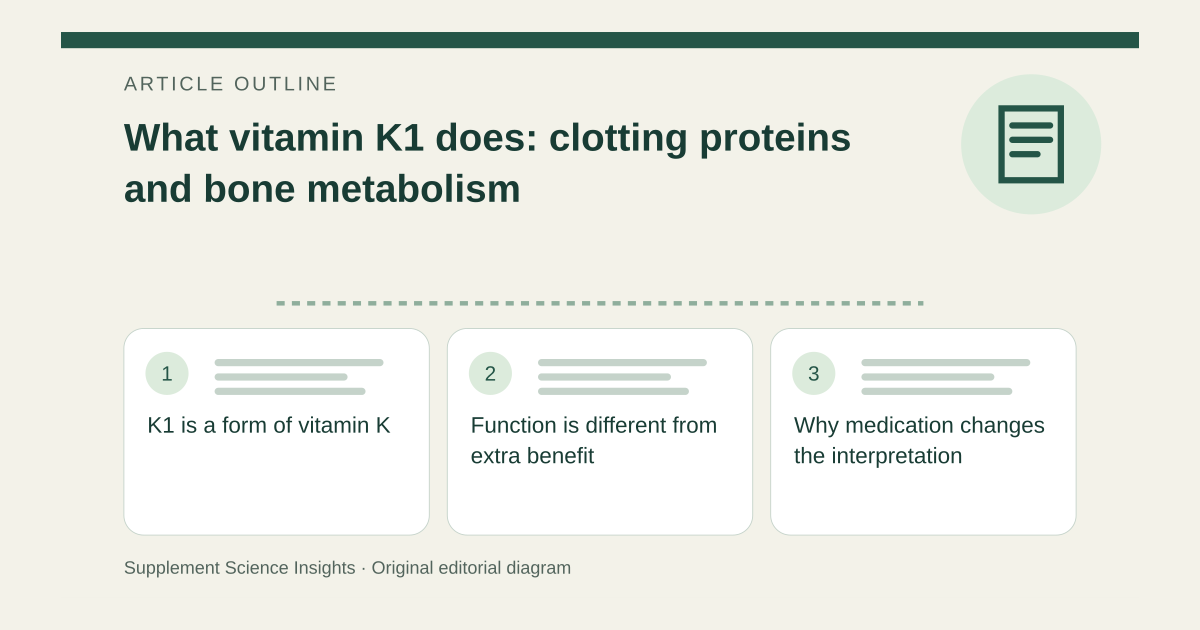
K1 is a form of vitamin K
Phylloquinone, or K1, occurs mainly in green leafy vegetables. Vitamin K acts as a coenzyme for an enzyme involved in producing functional vitamin K-dependent proteins. These include clotting proteins and proteins involved in bone metabolism. K1 is not a mineral, and it is not the same molecule as the menaquinones called K2. [1]
Function is different from extra benefit
Normal clotting requires vitamin K. That does not mean increasing K1 is a way for a healthy person to improve clotting, or that a supplement is a substitute for assessment of unexplained bleeding. Bone-related protein activation also cannot by itself establish that an additional supplement prevents fractures. NIH ODS describes uncertainty in translating vitamin K supplementation research into routine bone or cardiovascular treatment. [1]
Why medication changes the interpretation
Warfarin opposes vitamin K activity. A person taking it should keep vitamin K intake consistent and discuss changes with the prescribing team. Imagine a usual diet suddenly gains a daily K1-containing supplement: this is a new exposure even though the same nutrient occurs in vegetables. Do not change the warfarin dose using a supplement label. [1]
| Hypothetical situation | What follows |
|---|---|
| K1 listed on a multivitamin | Identify the amount and include it in the intake history |
| Warfarin plus a planned new K1 supplement | Discuss the change with the treating team |
| A claim of stronger bones | Normal nutrient function alone does not prove fracture prevention |
Sources for this article
- Vitamin K - Health Professional Fact Sheet
Source consulted: 2026-09-20. This is a reference resource, not a claim that we conducted the studies or tested a product.