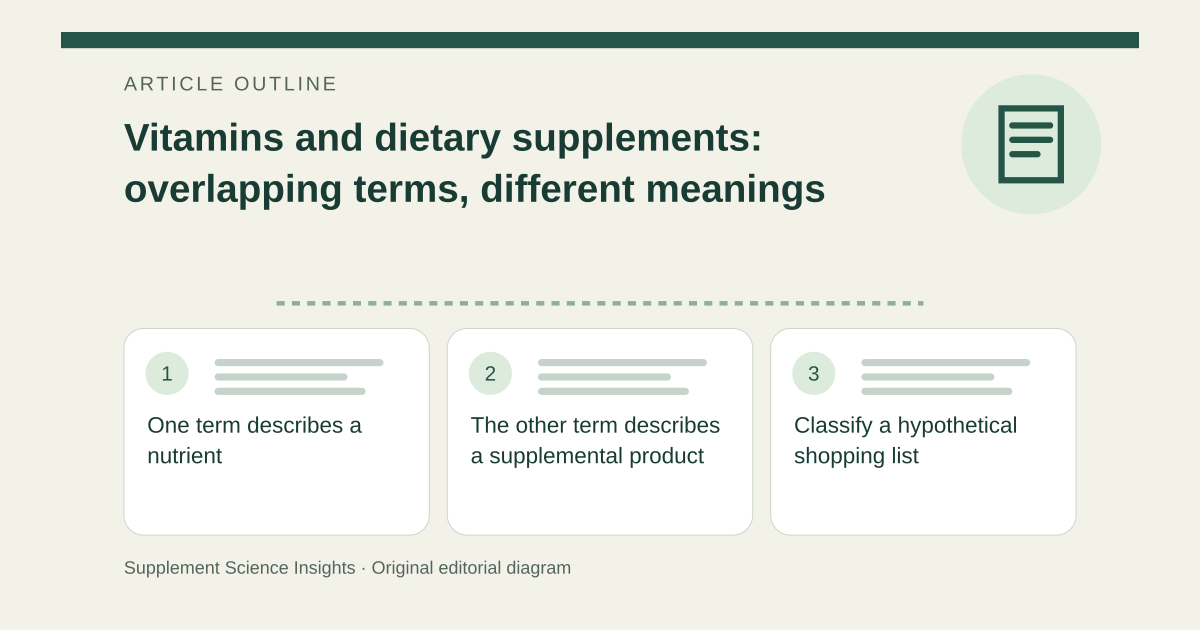
One term describes a nutrient
Vitamins are substances needed for normal cellular function, growth and development. Examples include vitamins A, C and D and the B vitamins. A vitamin can occur in ordinary food or be supplied in a fortified food or supplement; being a vitamin does not mean it exists only in a tablet. [1]
The other term describes a supplemental product
Dietary supplements can contain vitamins, but also minerals, botanical ingredients, amino acids, enzymes and other substances. A vitamin D capsule is both a vitamin-containing product and a supplement. A magnesium supplement is a supplement containing a mineral, not a vitamin. A multivitamin does not stand for every possible supplement. [2]
The Supplement Facts panel identifies declared ingredients and amounts per serving. Product form—gummy, capsule, powder or liquid—does not establish effectiveness or safety. Supplements can help address some nutrient needs, but they do not replace a varied diet, and FDA does not determine their effectiveness before marketing. [2]
Classify a hypothetical shopping list
Imagine a list contains vitamin C tablets, a magnesium capsule and a botanical extract. All three may be dietary supplements, but only the first is a vitamin supplement on the information given. To decide whether one is useful, move beyond the category and identify the ingredient, amount, purpose and relevant evidence. This classification is not a recommendation to buy any of them. [2]
| Description | Category |
|---|---|
| Vitamin C tablet | Vitamin-containing supplement |
| Magnesium capsule | Mineral supplement |
| Botanical extract capsule | Botanical supplement |
Sources for this article
- Vitamins: MedlinePlus Medical Encyclopedia
Source consulted: 2026-09-20. This is a reference resource, not a claim that we conducted the studies or tested a product. - Dietary Supplements: What You Need to Know - Consumer
Source consulted: 2026-09-20. This is a reference resource, not a claim that we conducted the studies or tested a product.