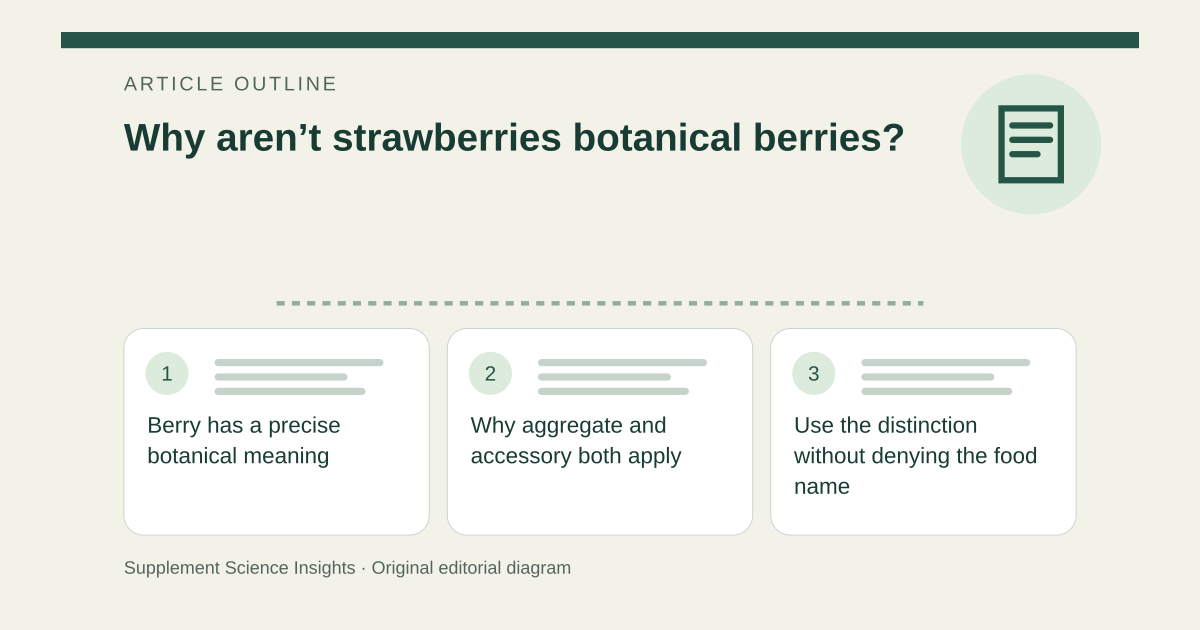
Berry has a precise botanical meaning
In everyday cooking, berry is a useful name for several small fruits. In botanical classification, a berry is a particular fleshy fruit type, such as a grape. The classification follows the flower structures that develop into the fruit, not simply its size, sweetness or common name. [1]
Why aggregate and accessory both apply
Several ovaries from one strawberry flower contribute the small achenes, making the structure aggregate. The enlarged receptacle forms most of the edible flesh, making it accessory. These terms describe different features of development and can apply at the same time. [2][1]
Use the distinction without denying the food name
Imagine labeling a diagram: mark the red body as receptacle and the surface dots as achenes containing seeds. A caption saying not a botanical berry is accurate; a caption saying not a fruit is misleading. Culinary and botanical uses answer different questions. [2][1]
| Detail | Meaning |
|---|---|
| Red flesh | Enlarged receptacle |
| Surface achene | Individual fruit enclosing seed |
| Whole strawberry | Aggregate accessory fruit |
Sources for this article
- University of Minnesota — Fruit Morphology
Source consulted: 2026-09-21. This is a reference resource, not a claim that we conducted the studies or tested a product. - Growing strawberries in your home garden | OSU Extension Service
Source consulted: 2026-09-21. This is a reference resource, not a claim that we conducted the studies or tested a product.