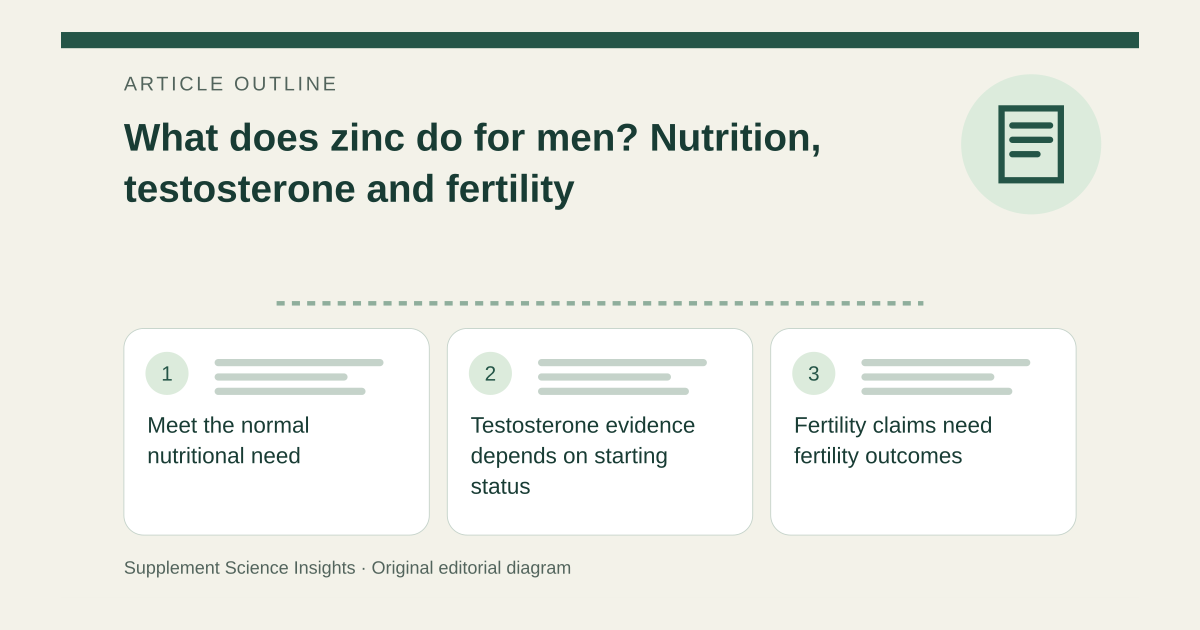
Meet the normal nutritional need
NIH lists 11 mg daily as the adult male zinc requirement. Food sources include meat, seafood and a range of plant foods, with absorption affected by dietary composition. The requirement is a total-intake reference, not an instruction to add an 11 mg tablet to every diet. [1]
Testosterone evidence depends on starting status
A systematic review found that baseline zinc and testosterone status, dose and duration can affect results. Most included studies were in animals. This supports attention to deficiency but does not establish that extra zinc consistently benefits men who already have adequate intake. [2]
Fertility claims need fertility outcomes
NIH reported that a large randomized trial of zinc plus folic acid in men from couples seeking infertility care did not improve live birth or most semen measures. That government summary concerns a specific combination, not every nutritional circumstance, but it challenges the assumption that reproductive biology alone proves supplement benefit. [3]
Sexual symptoms need their own assessment
NIDDK describes multiple causes and established treatment options for erectile dysfunction. A testosterone-related supplement claim does not demonstrate improved erections, and neither outcome is the same as fertility. Persistent problems should be discussed directly rather than treated as interchangeable signs of low zinc. [4]
More can introduce harm
Imagine a man combines a multivitamin with a separate zinc booster. Count the total elemental amount: NIH sets an adult upper limit of 40 mg daily from all sources for healthy people, with medically supervised treatment considered separately. Prolonged high doses can impair copper absorption. [1]
| Goal | Relevant assessment |
|---|---|
| Adequate zinc | Diet and nutritional context |
| Low testosterone | Clinical hormone evaluation |
| Erection difficulty | ED assessment |
| Fertility | Couple-level reproductive evaluation |
Sources for this article
- Zinc - Health Professional Fact Sheet
Source consulted: 2026-09-21. This is a reference resource, not a claim that we conducted the studies or tested a product. - Correlation between serum zinc and testosterone: A systematic review.
Source consulted: 2026-09-21. This is a reference resource, not a claim that we conducted the studies or tested a product. - Zinc, folic acid supplement does not improve male fertility, NIH study suggests
Source consulted: 2026-09-21. This is a reference resource, not a claim that we conducted the studies or tested a product. - Treatment for Erectile Dysfunction - NIDDK
Source consulted: 2026-09-21. This is a reference resource, not a claim that we conducted the studies or tested a product.