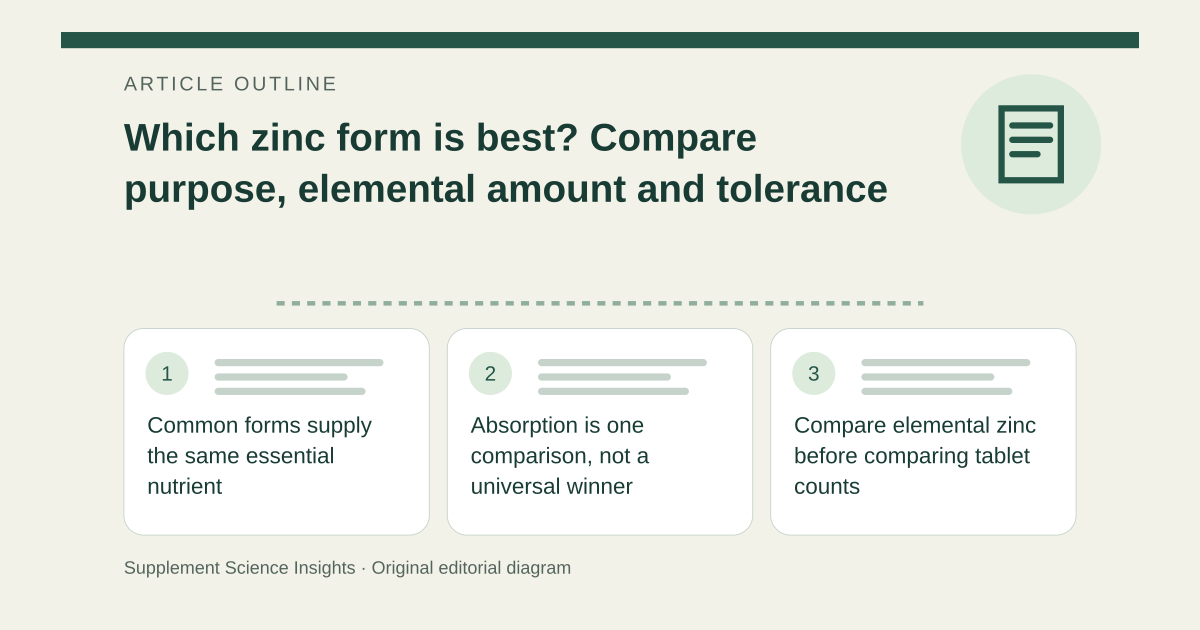
Common forms supply the same essential nutrient
ODS lists sulfate, acetate and gluconate among common supplement forms. Citrate and oxide also appear in its absorption discussion. Picolinate is a zinc salt of picolinic acid. These names describe the compound carrying zinc; they do not create separate nutritional requirements. [1][2]
Absorption is one comparison, not a universal winner
ODS summarizes similar absorption for citrate and gluconate and lower absorption for oxide in the cited young-adult evidence. That does not establish a ranking for every age, meal, formulation or clinical outcome. The cited overview also does not establish picolinate as universally superior. A claim of better absorption needs relevant comparative evidence, not simply a premium label. [1]
Compare elemental zinc before comparing tablet counts
The Supplement Facts amount is elemental zinc, not the weight of the full compound. Two products can provide the same zinc amount with different salt names. Look at the serving size too: an amount declared per two tablets is not the amount in one. Tolerance, cost and a clinician-directed purpose can matter more than an unsupported best-form claim. [1]
More zinc is not a better selection strategy
The U.S. adult upper limit is 40 mg daily from all sources outside supervised treatment. Excess can cause gastrointestinal symptoms and interfere with copper status. Zinc can also interfere with some antibiotics and penicillamine; a pharmacist can check exact medicines and timing. Do not choose a high amount just because the form sounds readily absorbed. [1]
A fair comparison keeps the dose constant
Imagine a gluconate product declares 15 mg zinc per tablet and a picolinate product declares 30 mg per two tablets. One tablet of each supplies the same declared elemental amount. Their different front-label numbers do not establish that the second product delivers twice as much per tablet or produces better health outcomes. [1]
| Label | Zinc per tablet |
|---|---|
| 15 mg per one tablet | 15 mg |
| 30 mg per two tablets | 15 mg |
Sources for this article
- Zinc - Health Professional Fact Sheet
Source consulted: 2026-09-21. This is a reference resource, not a claim that we conducted the studies or tested a product. - PubChem: Zinc Picolinate, CID9904746
Source consulted: 2026-09-21. This is a reference resource, not a claim that we conducted the studies or tested a product.