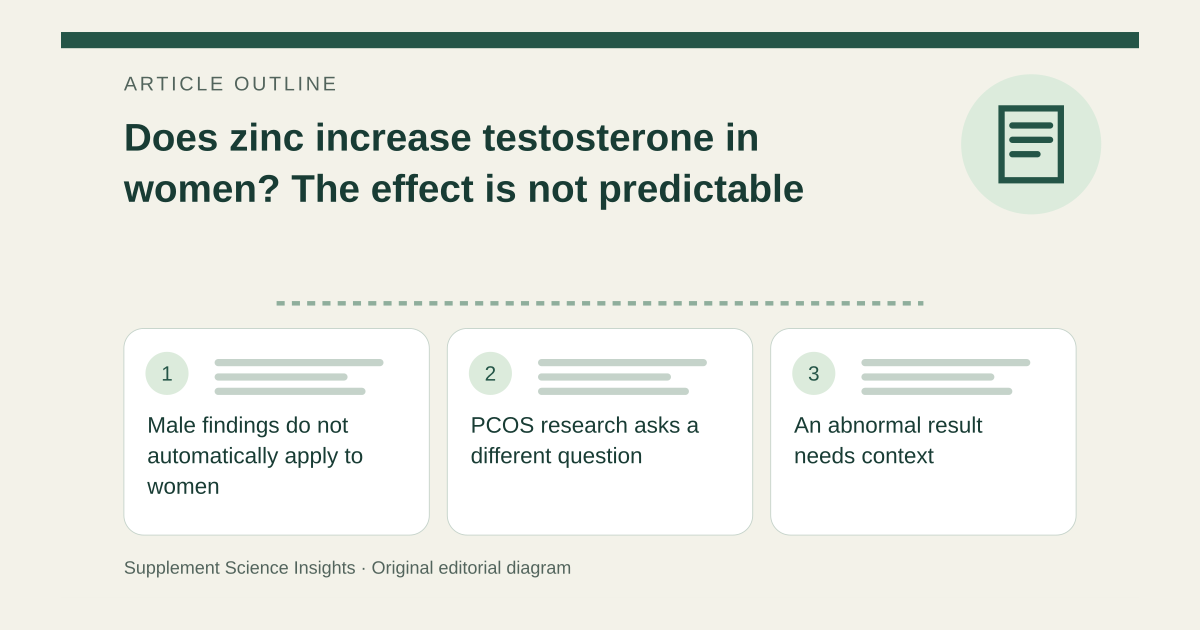
Male findings do not automatically apply to women
The inspected systematic review of zinc and testosterone was focused on males and included 30 animal studies alongside eight clinical studies. Its conclusions do not establish an effect, dose or safety plan for women seeking to increase testosterone. [1]
PCOS research asks a different question
The female-reproductive review describes uncertainty about zinc supplementation and testosterone in PCOS. Some interventions included other nutrients, making it difficult to isolate zinc. PCOS can involve excess androgens, so raising testosterone would not be a universal therapeutic goal. [2][3]
An abnormal result needs context
PCOS assessment considers symptoms and the broader hormonal and metabolic picture. A supplement response cannot be predicted from a symptom such as tiredness or from a marketing claim about hormone balance. Discuss the reason for testing and interpretation with the clinician. [3]
Nutritional adequacy is a separate objective
NIH lists an adult female zinc requirement of 8 mg daily outside pregnancy or lactation. This is a nutritional reference, not a testosterone-raising dose. Excessive intake can cause gastric effects and impair copper absorption over time. [4]
Avoid treating an unverified target
Imagine someone chooses a high-dose zinc product because a study in deficient men reported a hormone change. The population, initial status and outcome do not establish benefit for her. Address a documented nutritional shortfall or diagnosed condition on its own evidence. [1][4]
| Question | Why it matters |
|---|---|
| Were women studied? | Male data may not transfer |
| Was PCOS present? | Initial hormonal context differs |
| Was zinc given alone? | Combinations obscure attribution |
| Was deficiency established? | Adequacy differs from boosting |
Sources for this article
- Correlation between serum zinc and testosterone: A systematic review.
Source consulted: 2026-09-21. This is a reference resource, not a claim that we conducted the studies or tested a product. - The Role of Zinc in Selected Female Reproductive System Disorders - PMC
Source consulted: 2026-09-21. This is a reference resource, not a claim that we conducted the studies or tested a product. - NHS 111 Wales - Health A-Z : Polycystic ovary syndrome
Source consulted: 2026-09-21. This is a reference resource, not a claim that we conducted the studies or tested a product. - Zinc - Health Professional Fact Sheet
Source consulted: 2026-09-21. This is a reference resource, not a claim that we conducted the studies or tested a product.