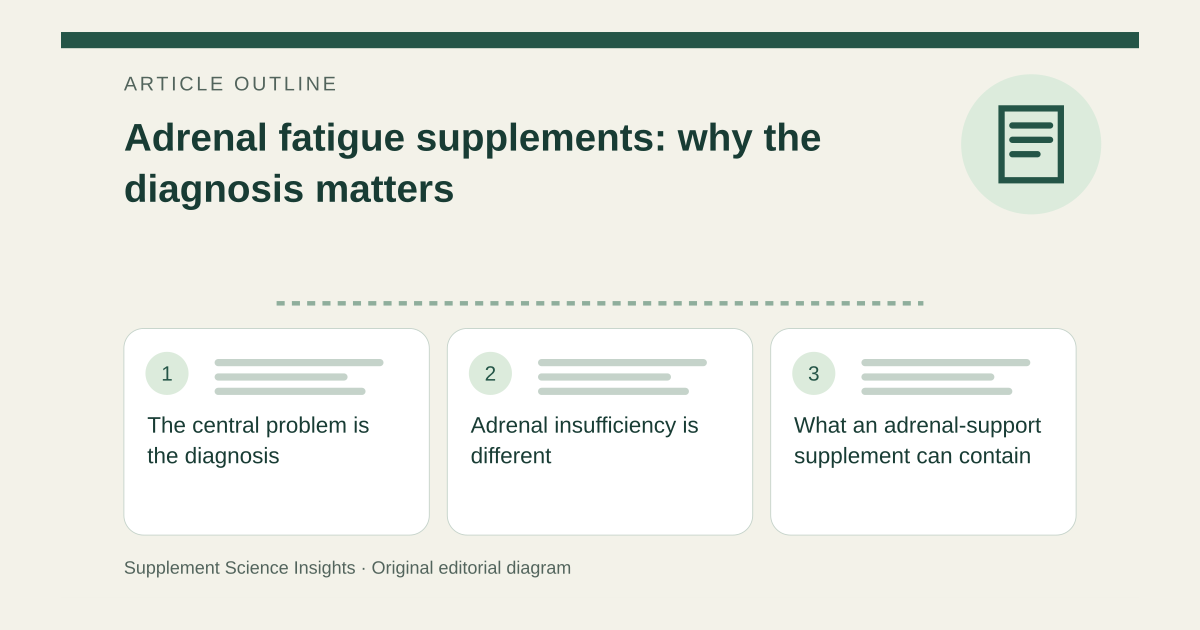
The central problem is the diagnosis
The Endocrine Society states that scientific evidence does not support adrenal fatigue as a true medical condition. The proposed explanation—that ordinary chronic stress wears out the adrenal glands until they cannot meet demand—should not be treated as an established diagnosis. [1]
This does not mean the fatigue, poor sleep or difficulty functioning is imaginary. Those symptoms can be real and deserve attention. The problem is assigning them to an unproven mechanism before identifying a cause. [1]
Adrenal insufficiency is different
Adrenal insufficiency is a recognized medical disorder, distinct from the commercial adrenal-fatigue concept. Other problems, including sleep disorders and depression, can also produce symptoms people attribute to adrenal fatigue. A clinician can assess the history and decide which investigations are appropriate. [1]
The Society cautions that tests promoted specifically for adrenal fatigue are not supported by good scientific studies. A blood or saliva result does not become a validated diagnosis merely because it is packaged as an adrenal-health panel. [1]
What an adrenal-support supplement can contain
Products sold under this name vary, so the category itself does not identify a standard treatment. Vitamins, herbs and purported glandular or hormone-related ingredients raise different questions about composition and safety. Evidence for one nutrient in a genuinely deficient person does not prove that a blend treats adrenal fatigue. [2][1]
NIH notes that supplement quality and clinical effectiveness are separate matters. A label or quality seal cannot establish that an unvalidated diagnosis is correct or that the product addresses the actual cause of persistent symptoms. [2][1]
Why hormone-related products are especially concerning
The Endocrine Society warns that taking adrenal hormones when they are not needed can suppress normal adrenal function. Stopping such exposure can leave a person unable to produce adequate hormones under stress. This is a reason for medical assessment, not a self-directed start-and-stop experiment. [1]
If you have been taking a product that may contain hormones, bring the actual container and ingredient information to a clinician. Do not assume that a product sold as a supplement has no hormonal activity, and do not treat this article as instructions to abruptly stop prescribed hormone treatment. [1]
What to do with persistent symptoms
Seek an evaluation focused on symptoms, medical history, sleep, medicines and other relevant factors. That is more useful than selecting a supplement first and using a marketing diagnosis to justify it. A documented nutrient deficiency can be addressed on its own merits without invoking adrenal fatigue. [1][2]
The evidence inspected here does not support a preferred adrenal-fatigue supplement or a universal restoration protocol. The concrete next step is a sound diagnosis and a review of products already being taken. [1][2]
A hypothetical consultation
Imagine someone brings a list of fatigue symptoms and a bottle labeled adrenal support to an appointment. The clinician can review the actual ingredients and investigate possible causes. That approach preserves the symptom information while avoiding the assumption that the product label has already identified the disease. [1]
| Item | Useful next question |
|---|---|
| Persistent fatigue | What causes need assessment? |
| Adrenal support product | What ingredients and exposures are present? |
| Abnormal test result | What validated condition does this test assess? |
Sources for this article
- Endocrine Society — Adrenal Fatigue
Source consulted: 2026-09-20. This is a reference resource, not a claim that we conducted the studies or tested a product. - Dietary Supplements: What You Need to Know - Consumer
Source consulted: 2026-09-20. This is a reference resource, not a claim that we conducted the studies or tested a product.