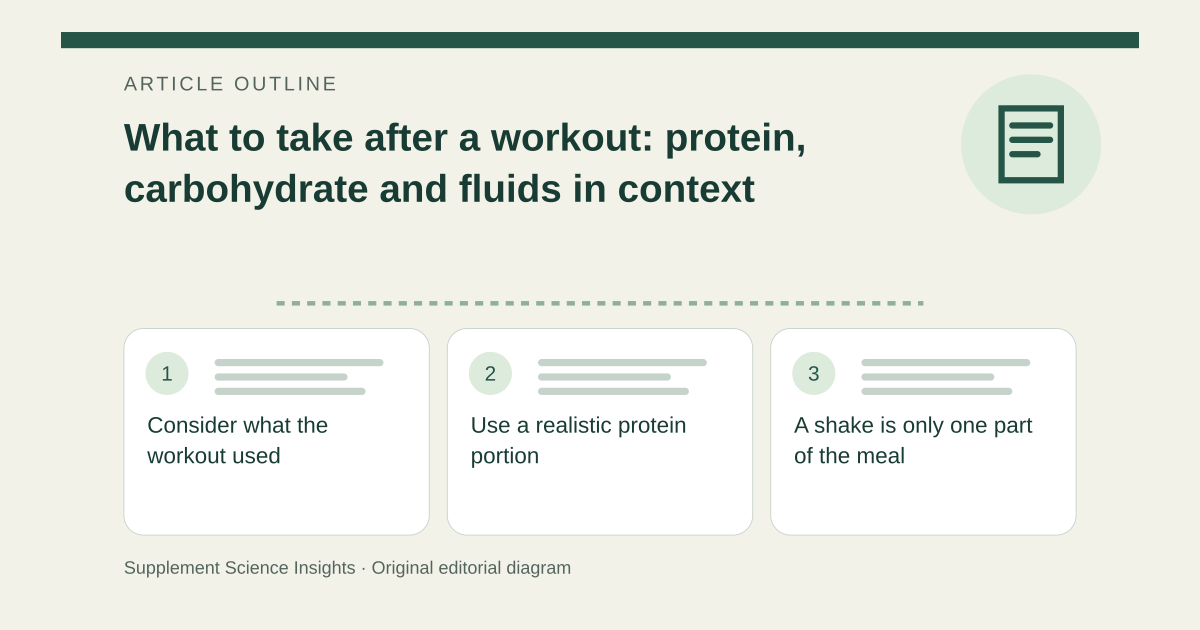
Consider what the workout used
ODS emphasizes adequate energy, carbohydrate, protein and hydration. A long endurance session and a brief resistance workout do not use fuel or fluid in identical ways. The next training session and the rest of the day’s meals influence how deliberately recovery needs to be planned. [1]
Use a realistic protein portion
ODS reports a sports-nutrition recommendation of about 0.3 g/kg of high-quality protein in the first two hours after exercise, with protein distributed through the day. This is athlete guidance rather than a universal prescription. For a hypothetical 70-kg athlete, the calculation is 21 g; it can come from food or a suitable powder. [1]
A shake is only one part of the meal
A protein drink may provide little carbohydrate or fluid relative to what a long session requires. Read the actual serving and account for any milk, fruit or other ingredients added. Conversely, a large mass-gainer can add much more energy than a casual workout calls for. [1][2]
Do not assume every recovery ingredient adds benefit
Multi-ingredient mixtures are often less well studied than individual components. The relevant question is whether the product fills a nutritional need or has evidence for the training outcome, not whether the label lists many amino acids. [1][3]
Compare the shake with the planned meal
Imagine dinner soon after training already provides protein, carbohydrate and fluid. A second large shake may duplicate it. If travel delays eating, a portable option can instead fill a practical gap; convenience is a valid reason without claiming a unique anabolic effect. [1][2]
| Goal or calculation | Interpretation |
|---|---|
| 70 kg × 0.3 g/kg | 21 g protein as an athlete reference |
| Long or repeated sessions | Fuel and fluid replacement also matter |
| Complete meal soon after exercise | A separate shake may be unnecessary |
Sources for this article
- Dietary Supplements for Exercise and Athletic Performance - Health Professional Fact Sheet
Source consulted: 2026-09-20. This is a reference resource, not a claim that we conducted the studies or tested a product. - How to Understand and Use the Nutrition Facts Label | FDA
Source consulted: 2026-09-20. This is a reference resource, not a claim that we conducted the studies or tested a product. - Dietary Supplements: What You Need to Know
Source consulted: 2026-09-20. This is a reference resource, not a claim that we conducted the studies or tested a product.