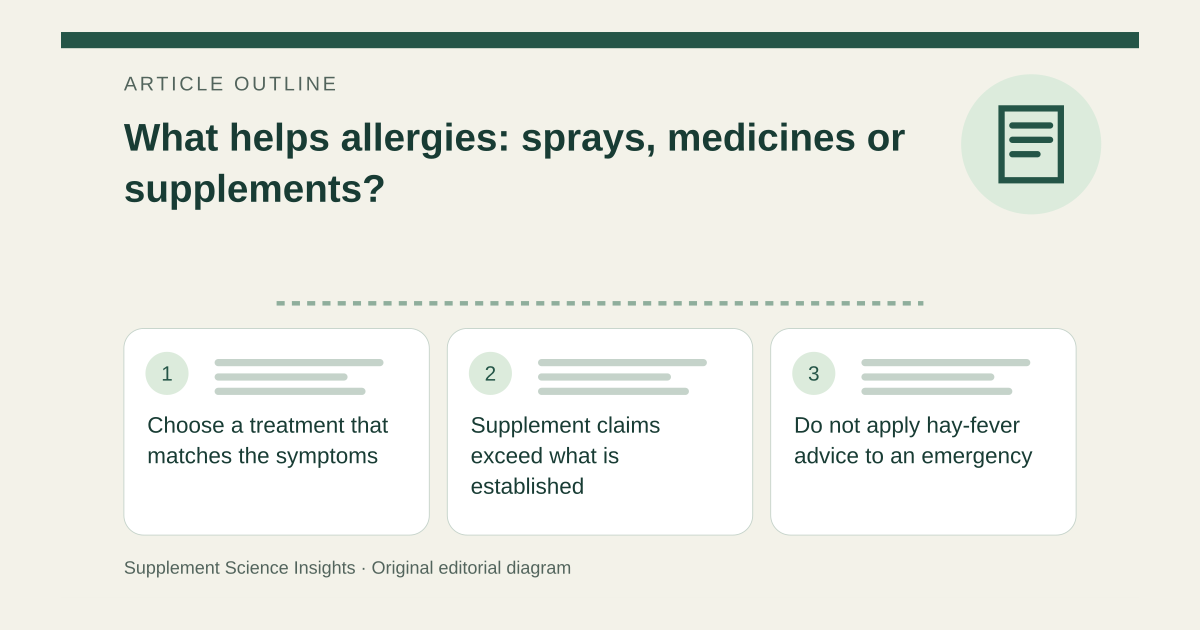
Choose a treatment that matches the symptoms
NHS guidance lists antihistamines, steroid sprays and saline options for allergic rhinitis. Decongestant sprays have short-use limits because overuse can worsen blockage; check the product instructions and pharmacist advice. Persistent symptoms, poor sleep or worsening asthma warrant assessment rather than adding more products. [1]
Supplement claims exceed what is established
NCCIH describes limited or conflicting evidence for butterbur, honey and probiotics, with safety concerns for some approaches. It supports saline irrigation as a potentially helpful option. Use distilled, sterile or previously boiled and cooled water for nasal irrigation, and follow device cleaning instructions; untreated tap water is inappropriate. [2]
Do not apply hay-fever advice to an emergency
Imagine someone with pollen symptoms asks about a probiotic. That is an evidence discussion, not a substitute for effective symptom treatment. Throat swelling, breathing difficulty or faintness after an exposure requires the emergency allergy plan and urgent care. Supplements do not replace emergency treatment. [3][2]
| Question | Useful check |
|---|---|
| What is the target? | A defined symptom or clinical result |
| What is the exposure? | Full formula and medicines |
| What supports the claim? | Evidence matching the person and outcome |
Sources for this article
- Allergic rhinitis - NHS
Source consulted: 2026-09-21. This is a reference resource, not a claim that we conducted the studies or tested a product. - Seasonal Allergies and Complementary Health Approaches | NCCIH
Source consulted: 2026-09-21. This is a reference resource, not a claim that we conducted the studies or tested a product. - Food Allergies: What You Need to Know | FDA
Source consulted: 2026-09-21. This is a reference resource, not a claim that we conducted the studies or tested a product.