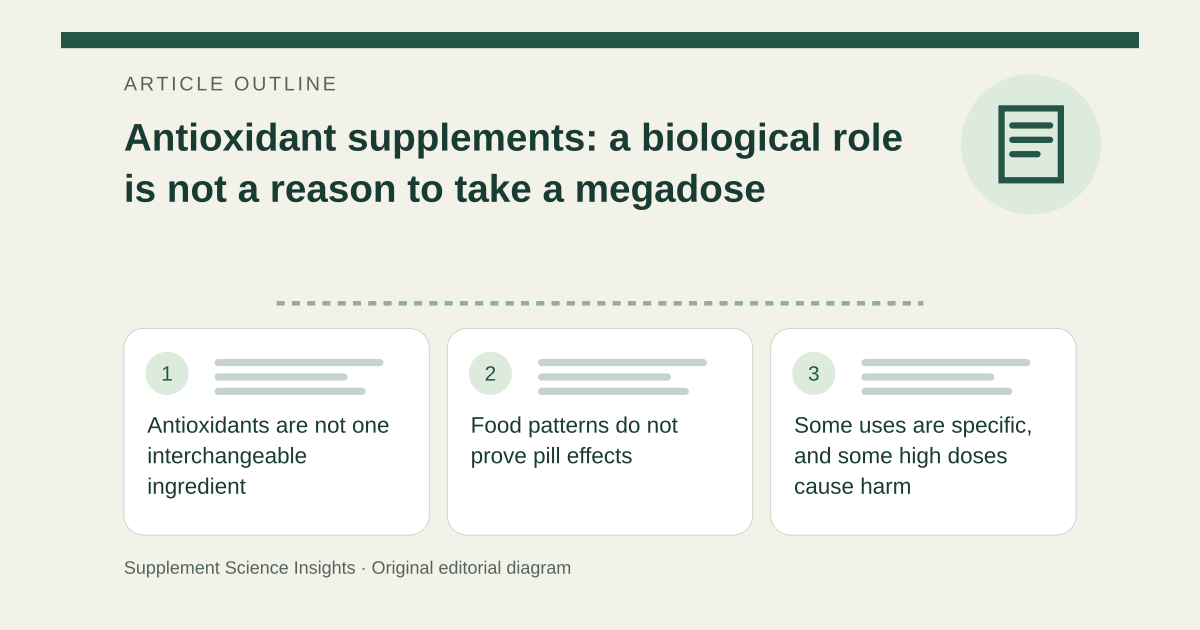
Antioxidants are not one interchangeable ingredient
The body makes antioxidant defenses, and foods supply additional compounds. Vitamin C, vitamin E and beta-carotene are examples sold as supplements. Their chemistry and effects differ; a larger combined milligram total does not describe a single beneficial activity. [1]
Food patterns do not prove pill effects
NCCIH distinguishes associations involving fruit and vegetable intake from trials of isolated antioxidant supplements. The latter have not generally supported cancer or cardiovascular prevention. Benefits linked with a dietary pattern cannot simply be transferred to a concentrated capsule. [1]
Some uses are specific, and some high doses cause harm
Certain formulations have a role for selected people with age-related macular degeneration. That exception does not make them universal eye-health or anti-aging supplements. High-dose beta-carotene can increase lung-cancer risk, especially in smokers or people exposed to asbestos. More is not inherently protective. [1]
Choose for an identified purpose
Imagine a multivitamin already supplies vitamin E and another blend adds a large dose for antioxidant support. Add the amounts and ask what clinical or nutritional need justifies the addition. Product quality and an impressive ingredient list do not establish a prevention benefit. [2]
| Check | Reason |
|---|---|
| Actual ingredient and total dose | Antioxidants are not interchangeable |
| Defined indication | Mechanism alone does not show benefit |
Sources for this article
- Antioxidant Supplements: What You Need To Know | NCCIH
Source consulted: 2026-09-20. This is a reference resource, not a claim that we conducted the studies or tested a product. - Dietary Supplements: What You Need to Know
Source consulted: 2026-09-20. This is a reference resource, not a claim that we conducted the studies or tested a product.