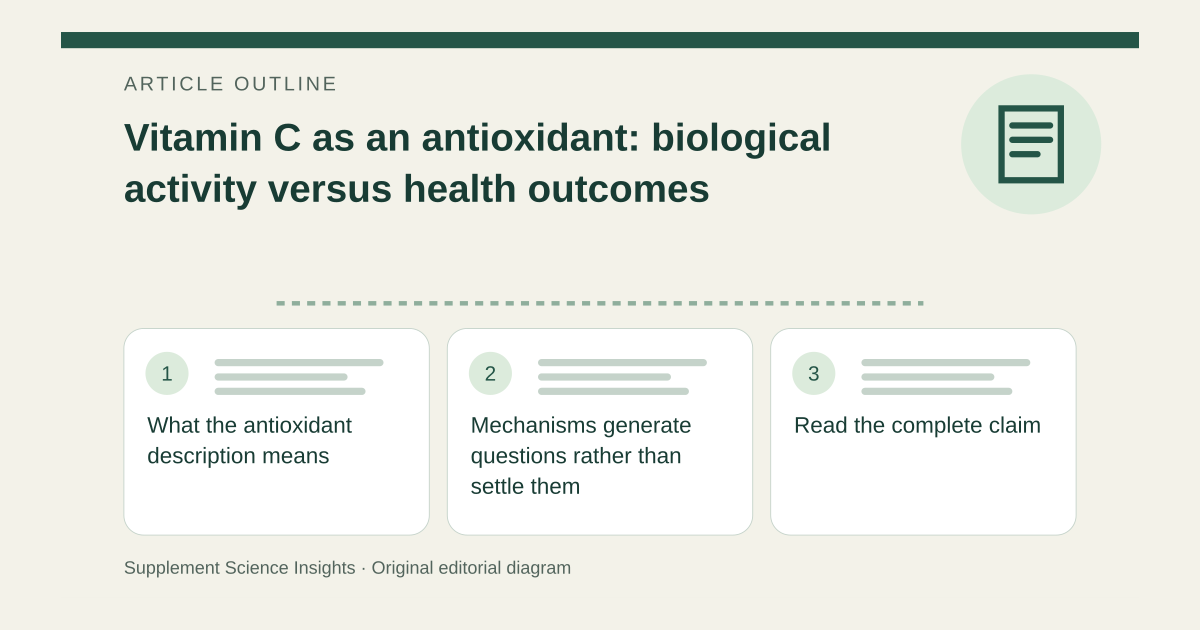
What the antioxidant description means
Vitamin C is a physiological antioxidant and can help regenerate other antioxidants, including alpha-tocopherol, a form of vitamin E. This is part of its normal biological activity, alongside roles in collagen and other metabolic processes. [1]
The word antioxidant describes a type of chemical activity. It does not, by itself, establish how much someone should supplement or demonstrate a reduction in a particular disease. [1]
Mechanisms generate questions rather than settle them
Because oxidative damage is involved in disease processes, researchers have studied whether vitamin C might affect cardiovascular disease and cancer. A plausible mechanism is a reason to investigate, not a substitute for measurements of clinical outcomes. [1]
The ODS synthesis distinguishes observational findings about diet or vitamin C status from trials of supplements. People eating vitamin-C-rich foods also differ in other aspects of diet and lifestyle, so an association cannot simply be assigned to an isolated tablet. [1]
Read the complete claim
Imagine a label moves from “vitamin C is an antioxidant” to “this product prevents chronic disease.” The first statement identifies a nutrient function; the second adds an intervention, a product and a disease outcome.
To support the second statement, evidence would need to match the preparation, people and outcome. Showing activity in a laboratory assay does not fill those gaps.
| Detail | Meaning |
|---|---|
| Biochemical antioxidant role | Describes normal activity |
| Higher marker or laboratory effect | Not itself a disease outcome |
| Product prevents disease | Requires relevant clinical evidence |
More antioxidant activity is not a universal goal
High vitamin C intake can cause gastrointestinal adverse effects, and particular medical circumstances change its suitability. An antioxidant label should not override those considerations or imply that an unlimited amount is better. [1]
Meeting nutritional needs and treating a diagnosed deficiency are clearer purposes than pursuing an undefined antioxidant score. This page explains the inference boundary; it does not provide a prevention regimen or independently reappraise all vitamin C trials. [1]
Sources for this article
- NIH ODS — Vitamin C: Health Professional Fact Sheet
Source consulted: 2026-09-17. This is a reference resource, not a claim that we conducted the studies or tested a product.