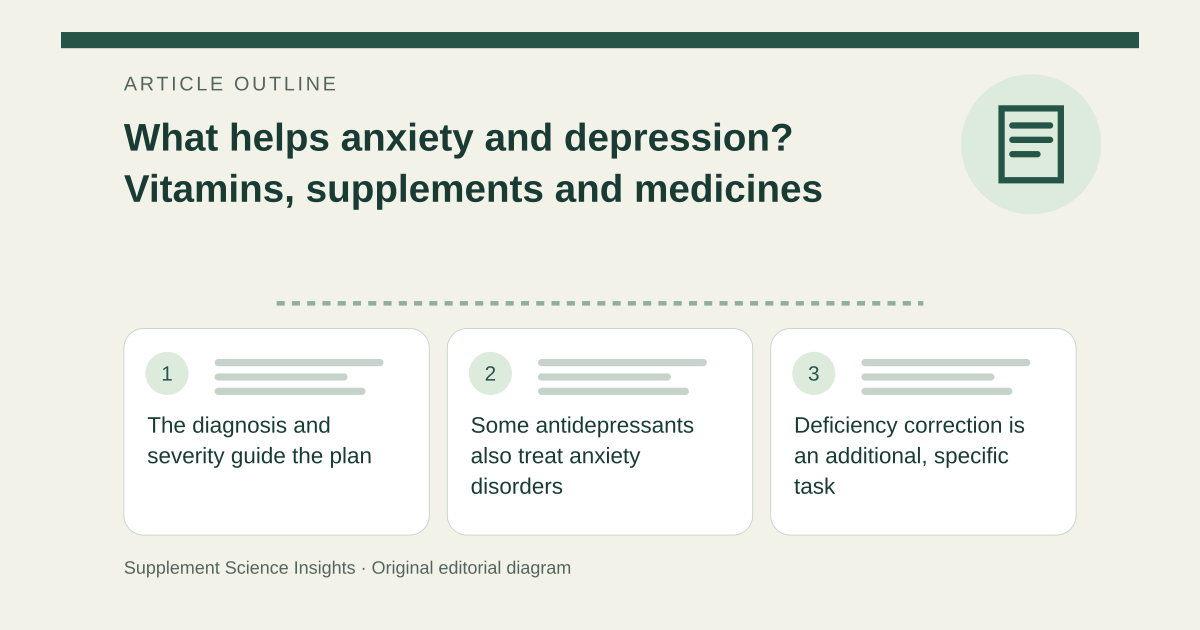
The diagnosis and severity guide the plan
Anxiety and depression can overlap, but symptoms and functional effects still need assessment. NIMH describes individualized treatment, often combining medicines with psychotherapy. The best choice depends on the person, previous response and other health conditions rather than a nutrient ranking. [1]
Some antidepressants also treat anxiety disorders
NIMH lists commonly used antidepressant classes including SSRIs and SNRIs and notes their use across depressive and anxiety disorders. Benefit and side effects vary, and treatment changes should be made with the prescriber. A medicine’s name does not mean it is appropriate for every form of anxiety. [1]
Deficiency correction is an additional, specific task
B12 deficiency can have neurological and psychological consequences and should be treated when present. That does not establish that high-dose B12 helps everyone with low mood or worry. Nutritional assessment and mental-health treatment can occur together without assuming one explains the other. [2][1]
Complementary products have uncertain benefit and real interactions
NCCIH describes mixed or uncertain findings for several depression supplements and cautions against replacing conventional care. St John’s wort can interact with antidepressants and other medicines. A natural label is not a reason to combine mood products without a medication review. [3][1]
Use follow-up and support rather than repeated product changes
NIMH recommends attention to sleep, activity, meals and social support, with professional help for persistent or severe symptoms. If there are thoughts of suicide or an immediate safety concern, seek urgent help; in the United States, call or text 988, and use emergency services for an immediate life-threatening situation. [4]
A practical comparison
Imagine someone starts a vitamin for fatigue while anxiety and depressed mood continue to disrupt work. The vitamin trial does not replace an assessment of those symptoms. Bring the full medicine and supplement list so nutritional needs, interactions and mental-health care can be addressed together. [1][2]
| Approach | Role |
|---|---|
| Deficiency replacement | Treats a demonstrated nutritional problem |
| Psychotherapy | Addresses clinically assessed symptoms and coping |
| Appropriate medication | May treat depression, anxiety or both |
| Supplement add-on | Requires evidence and interaction review |
Sources for this article
- Mental Health Medications - National Institute of Mental Health (NIMH)
Source consulted: 2026-09-21. This is a reference resource, not a claim that we conducted the studies or tested a product. - Vitamin B12 - Health Professional Fact Sheet
Source consulted: 2026-09-21. This is a reference resource, not a claim that we conducted the studies or tested a product. - 8 Things To Know About Depression and Complementary Health Approaches | NCCIH
Source consulted: 2026-09-21. This is a reference resource, not a claim that we conducted the studies or tested a product. - Caring for Your Mental Health - National Institute of Mental Health (NIMH)
Source consulted: 2026-09-21. This is a reference resource, not a claim that we conducted the studies or tested a product.