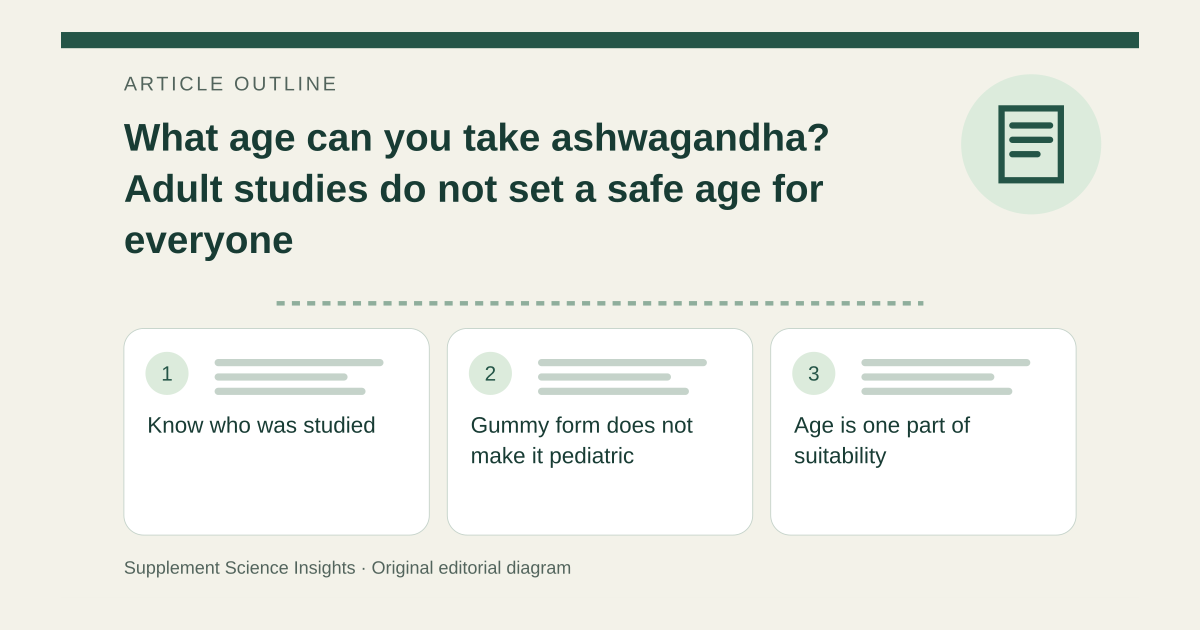
Know who was studied
ODS summarizes research conducted largely in adults using defined preparations. Those studies do not establish a universal safe starting age, pediatric dose or benefit for a child’s sleep or behavior. Reaching a particular birthday also does not remove contraindications or interactions in an adult. [1]
Gummy form does not make it pediatric
A chewable or sweetened preparation can look child-friendly without having relevant pediatric safety evidence. Check the actual label and discuss any proposed use with the child’s clinician. Do not divide an adult serving by body weight and assume the result has been tested. [2][1]
Age is one part of suitability
Imagine an adult meets a label’s age threshold but has thyroid disease or takes a sedative. NCCIH identifies these as relevant safety contexts. The age statement alone cannot settle the decision. Keep products securely stored to prevent accidental ingestion, and seek exposure-specific advice if a child takes them unintentionally. [3][4]
| Illustration | Meaning |
|---|---|
| Adult trial | Does not establish pediatric dosing |
| Label age threshold | Not a full clinical assessment |
| Child accidental ingestion | Seek case-specific advice |
Sources for this article
- Ashwagandha: Is it helpful for stress, anxiety, or sleep? - Health Professional Fact Sheet
Source consulted: 2026-09-20. This is a reference resource, not a claim that we conducted the studies or tested a product. - Questions and Answers on Dietary Supplements | FDA
Source consulted: 2026-09-20. This is a reference resource, not a claim that we conducted the studies or tested a product. - Ashwagandha: Usefulness and Safety | NCCIH
Source consulted: 2026-09-20. This is a reference resource, not a claim that we conducted the studies or tested a product. - Dietary Supplements: What You Need to Know
Source consulted: 2026-09-20. This is a reference resource, not a claim that we conducted the studies or tested a product.