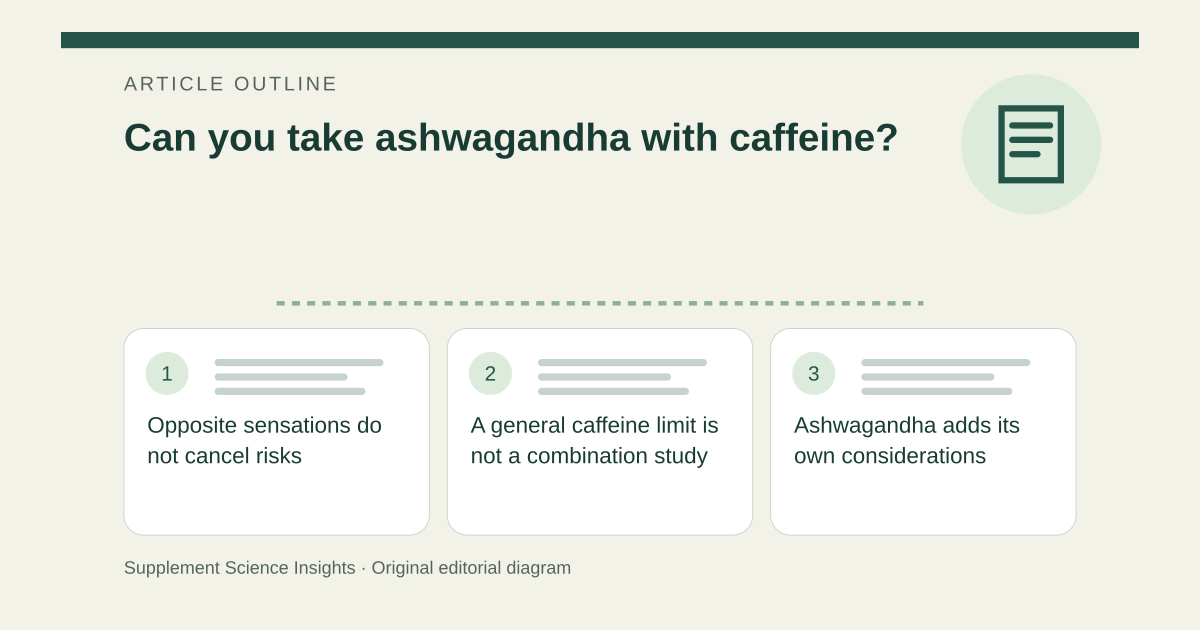
Opposite sensations do not cancel risks
Feeling calmer after a botanical does not establish that caffeine no longer affects sleep or heart rate. FDA guidance describes substantial variation in caffeine sensitivity. Count coffee, tea, energy drinks and supplements together rather than considering only the drink taken with ashwagandha. [1]
A general caffeine limit is not a combination study
FDA cites 400 mg daily as an amount not generally associated with negative effects for most adults. That is not a target, does not apply to everyone, and does not establish safety with ashwagandha. Symptoms can occur at lower amounts. [1]
Ashwagandha adds its own considerations
NCCIH identifies drowsiness, gastrointestinal effects, rare liver injury and interactions with several medicine classes. Thyroid disorders, pregnancy and breastfeeding are important reasons to avoid it. A mixed energy or relaxation product may contain additional active ingredients. [2]
Respond to symptoms instead of adding another product
Imagine an energy drink causes shakiness and poor sleep. Adding ashwagandha is not an evidence-based way to neutralize that reaction. Reduce the stimulant exposure and review persistent symptoms and the full ingredient list with a clinician. [1][2]
| Ingredient | Relevant issue |
|---|---|
| Caffeine | Total amount and sensitivity |
| Ashwagandha | Drowsiness and contraindications |
| Combination | No guaranteed cancellation |
| New symptoms | Reassess use |
Sources for this article
- Spilling the Beans: How Much Caffeine is Too Much? | FDA
Source consulted: 2026-09-21. This is a reference resource, not a claim that we conducted the studies or tested a product. - Ashwagandha: Usefulness and Safety | NCCIH
Source consulted: 2026-09-21. This is a reference resource, not a claim that we conducted the studies or tested a product.