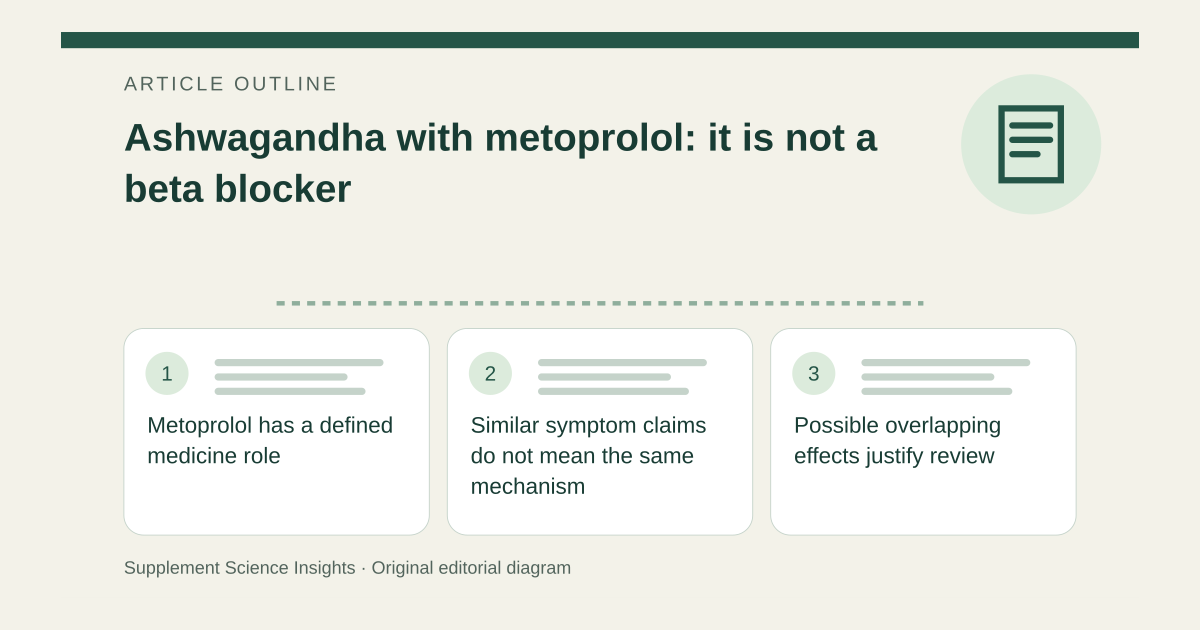
Metoprolol has a defined medicine role
NHS describes metoprolol as a prescription beta blocker that slows heart rate and is used for conditions including high blood pressure, some arrhythmias and angina. Ashwagandha is a botanical preparation with different and less well-defined clinical evidence. [1][2]
Similar symptom claims do not mean the same mechanism
Feeling less stressed or observing a blood-pressure change does not establish beta-receptor blockade. The reviewed sources do not show that ashwagandha can replace metoprolol for rhythm control, heart disease or any of its prescribed indications. [1][2]
Possible overlapping effects justify review
NCCIH cautions about combinations with antihypertensive medicines. This does not quantify the effect of ashwagandha on metoprolol in a particular person. The indication, usual heart rate and blood pressure, other medicines and exact extract all matter. [2][3]
Do not change the prescription to fit the supplement
Imagine a person on metoprolol wants ashwagandha for stress. Ask the pharmacist or prescriber to review the proposal and any dizziness or unusual tiredness. Do not reduce or stop metoprolol based on a claim that the herb is a natural beta blocker. [1][3]
| Feature | Distinction |
|---|---|
| Metoprolol | Prescription beta blocker |
| Ashwagandha | Botanical with variable preparations |
| Shared symptom claim | Not equivalent action |
| Combined use | Individual review |
Sources for this article
- About metoprolol - NHS
Source consulted: 2026-09-21. This is a reference resource, not a claim that we conducted the studies or tested a product. - Ashwagandha: Usefulness and Safety | NCCIH
Source consulted: 2026-09-21. This is a reference resource, not a claim that we conducted the studies or tested a product. - Dietary Supplements: What You Need to Know
Source consulted: 2026-09-21. This is a reference resource, not a claim that we conducted the studies or tested a product.