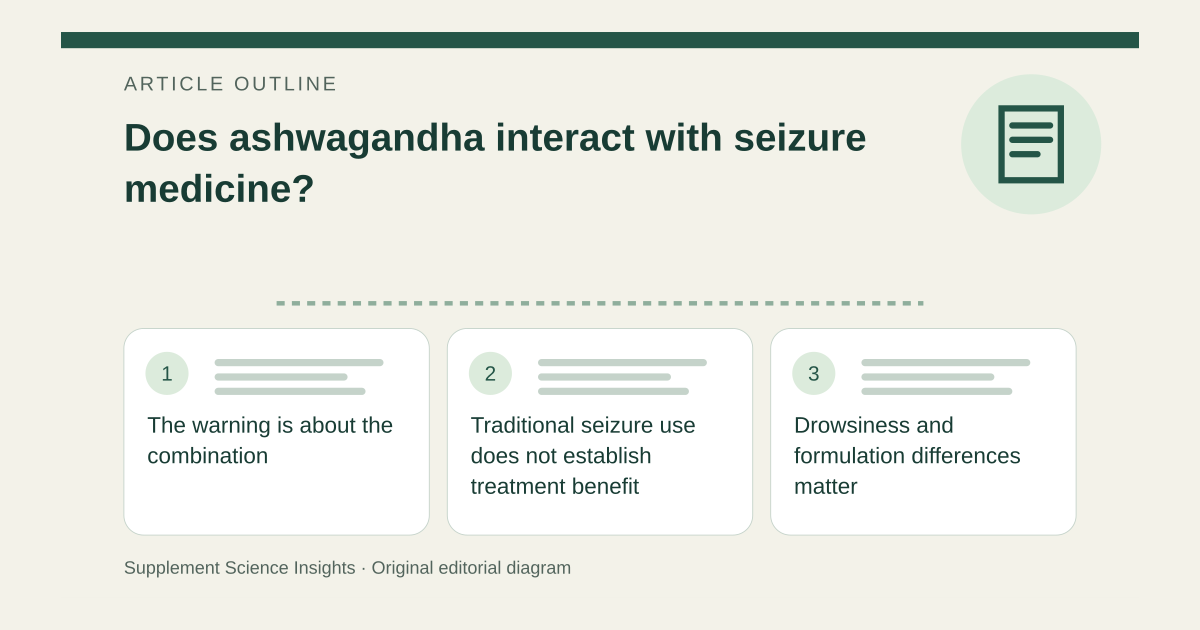
The warning is about the combination
NCCIH lists anticonvulsants among medicines that may interact with ashwagandha. MSK discusses possible additive sedative and GABA-related effects based on preclinical evidence, with uncertain clinical relevance. That is a reason for review, not a measured risk for every drug. [1][2]
Traditional seizure use does not establish treatment benefit
Ashwagandha has been used traditionally for several conditions, but this does not make a retail supplement an effective epilepsy medicine. Animal findings and historical use cannot replace controlled clinical evidence or an individualized seizure plan. [2]
Drowsiness and formulation differences matter
Ashwagandha itself can cause drowsiness. A product containing other calming ingredients adds further uncertainty. Separating doses by a few hours does not demonstrate that overlapping effects will disappear. [1][3]
Keep seizure treatment stable while seeking advice
Imagine a person taking an anticonvulsant wants a sleep supplement containing ashwagandha. Give the treating clinician the full ingredient list before using it. Do not skip or taper the prescribed medicine because a botanical is described as natural or GABA-supporting. [2][3]
| Question | Reason |
|---|---|
| Which anticonvulsant? | Drugs differ |
| Other sedating ingredients? | May add effects |
| Daytime drowsiness? | Relevant symptom |
| Change prescribed treatment? | Requires treating clinician |
Sources for this article
- Ashwagandha: Usefulness and Safety | NCCIH
Source consulted: 2026-09-21. This is a reference resource, not a claim that we conducted the studies or tested a product. - Ashwagandha | Memorial Sloan Kettering Cancer Center
Source consulted: 2026-09-21. This is a reference resource, not a claim that we conducted the studies or tested a product. - Dietary Supplements: What You Need to Know
Source consulted: 2026-09-21. This is a reference resource, not a claim that we conducted the studies or tested a product.