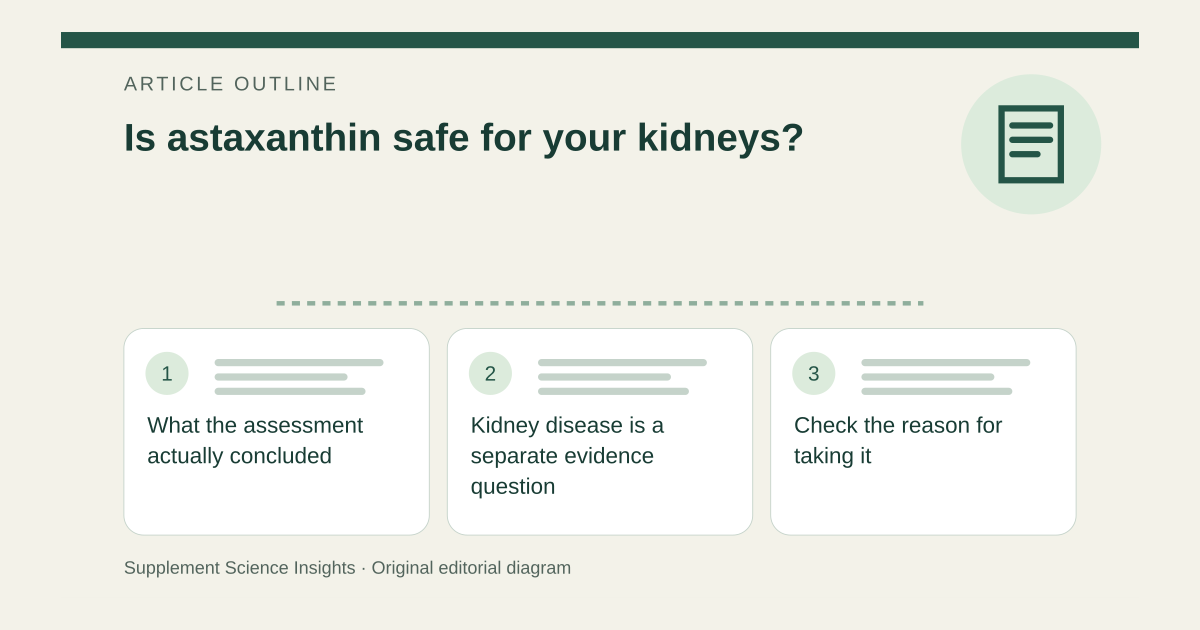
What the assessment actually concluded
EFSA’s 2020 opinion concluded that 8 mg per day from supplements was safe for adults under its combined-exposure assessment. This is an assessment of a defined ingredient and exposure scenario, not a personal dose recommendation. It should not be extrapolated automatically to children, higher intakes or unrelated formulations. [1]
Kidney disease is a separate evidence question
The opinion does not establish a treatment for chronic kidney disease or a universal regimen for dialysis or transplant patients. A normal safety finding in a broad assessment cannot resolve an individual’s reduced kidney function, medicines or additional ingredients. Claims about antioxidant mechanisms also do not demonstrate slower kidney-disease progression. [1][2]
Check the reason for taking it
Imagine someone with impaired kidney function wants astaxanthin because an advertisement says kidney support. The nephrology team should review the exact label, current treatment and intended outcome. The evidence inspected here does not justify using it instead of kidney care, and more is not automatically better. [2][1]
| Question | Useful check |
|---|---|
| What is the target? | A defined symptom or clinical result |
| What is the exposure? | Full formula and medicines |
| What supports the claim? | Evidence matching the person and outcome |
Sources for this article
- Safety of astaxanthin for its use as a novel food in food supplements - PMC
Source consulted: 2026-09-21. This is a reference resource, not a claim that we conducted the studies or tested a product. - Dietary Supplements: What You Need to Know - Consumer
Source consulted: 2026-09-21. This is a reference resource, not a claim that we conducted the studies or tested a product.