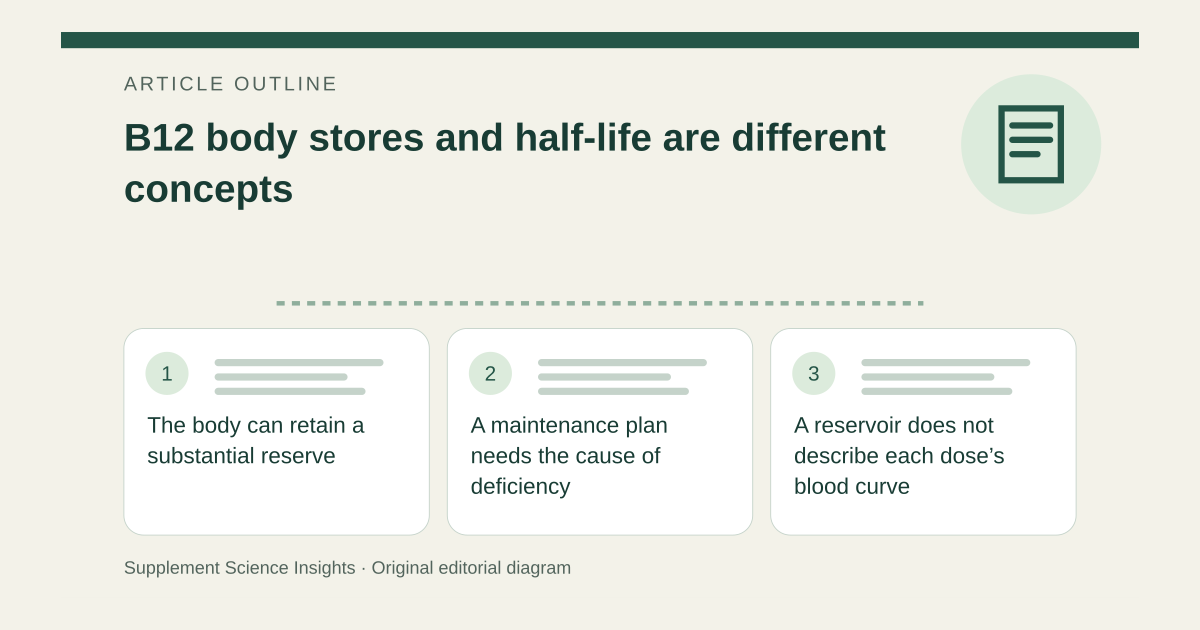
The body can retain a substantial reserve
NIH ODS estimates that the body stores roughly 1 to 5 milligrams of B12. Because reserves can be large relative to daily intake, signs of inadequate intake may take years to appear. [1]
That estimate describes stored nutrient, not the time for a particular injected or swallowed dose to halve in the bloodstream. The quantities and compartments are different. [1]
A maintenance plan needs the cause of deficiency
NICE bases treatment and follow-up on the clinical situation, including whether the cause persists. A person with lasting malabsorption and a person correcting a dietary gap do not necessarily have the same maintenance needs. [2]
Do not derive an injection interval or a plan to stop treatment from a generic half-life figure. Long-lived stores do not prove that current absorption is adequate or that neurological symptoms can safely wait. [2]
A reservoir does not describe each dose’s blood curve
Imagine two people have different B12 reserves and absorption capacity. Even if they take the same preparation, a single published blood-kinetic value would not establish the same long-term replacement plan for both.
| Detail | Interpretation |
|---|---|
| Body stores | A nutrient reserve |
| Blood half-life | A kinetic measurement |
| Treatment interval | Depends on the clinical plan |
Sources for this article
- Vitamin B12 - Health Professional Fact Sheet
Source consulted: 2026-09-19. This is a reference resource, not a claim that we conducted the studies or tested a product. - Recommendations | Vitamin B12 deficiency in over 16s: diagnosis and management | Guidance | NICE
Source consulted: 2026-09-19. This is a reference resource, not a claim that we conducted the studies or tested a product.