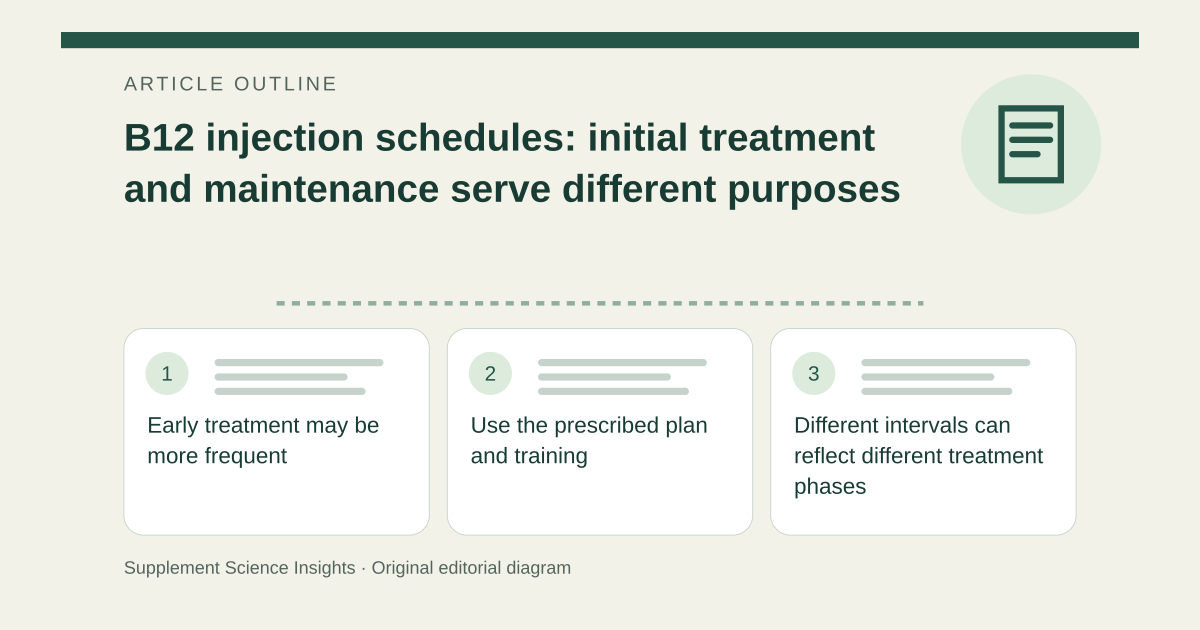
Early treatment may be more frequent
The NHS describes hydroxocobalamin treatment as often beginning with injections several times a week, followed by less frequent maintenance in appropriate cases. This is an example of a clinical treatment pattern, not a schedule for self-prescribing. [1]
The underlying cause matters. The NHS notes that pernicious anemia generally requires lifelong replacement. Improvement after initial treatment does not necessarily remove an ongoing absorption problem. [1]
Use the prescribed plan and training
The NHS describes intramuscular administration, usually by a nurse or doctor. Needle selection and technique depend on the prescribed product and clinical circumstances; a generic article cannot establish the right equipment for a particular person. [1]
If an appointment is missed, contact the treating team about the next dose rather than doubling or improvising a schedule. A return of symptoms also warrants review rather than assuming it proves that the injection has a fixed personal expiry time. [1]
Different intervals can reflect different treatment phases
Imagine a patient moves from frequent initial injections to longer maintenance intervals. The change can reflect the treatment plan rather than a weaker preparation. Another patient’s interval is not a substitute for the prescriber’s instructions.
| Observation | What it establishes |
|---|---|
| Initial phase | Repletion |
| Maintenance | Depends on continuing need |
| Missed appointment | Ask the treating team |
Sources for this article
- NHS: Having your hydroxocobalamin injection
Source consulted: 2026-09-17. This is a reference resource, not a claim that we conducted the studies or tested a product.