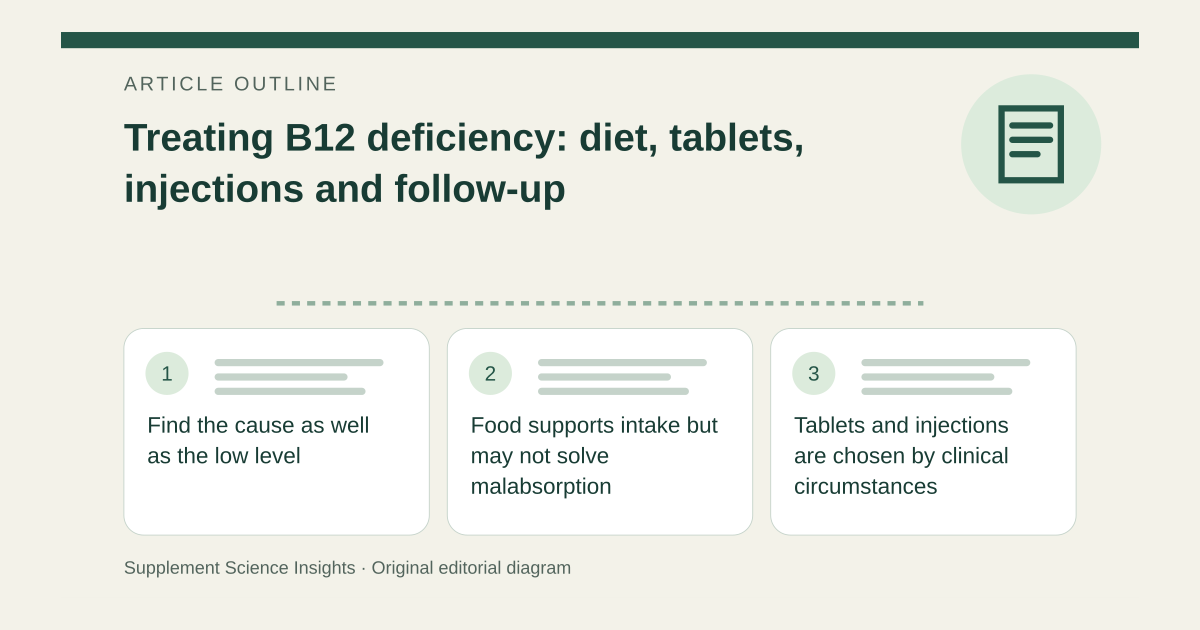
Find the cause as well as the low level
NICE recommends assessing diet, medicines, gastrointestinal causes and relevant symptoms. A vegan diet may contribute without being the only cause. Neurological symptoms can occur without anemia, so the blood count alone should not dismiss a possible deficiency. [1]
Food supports intake but may not solve malabsorption
B12 occurs in animal foods and fortified products. Dietary deficiency can be addressed with improved intake and, when appropriate, oral replacement. Absorption problems can require a different route or treatment amount; food advice is not an adequate substitute for indicated clinical replacement. [2][1]
Tablets and injections are chosen by clinical circumstances
UK NICE guidance recommends lifelong intramuscular replacement for autoimmune gastritis, total gastrectomy or complete terminal ileal resection. For other malabsorption it advises replacement and consideration of injections. When oral replacement is prescribed for suspected or confirmed malabsorption, NICE specifies at least 1 mg daily. This is a clinician-directed guideline context, not a universal self-treatment dose. [1]
Nerve pain does not by itself select a B12 dose
Neuropathy can have multiple causes. B12 replacement is relevant when deficiency is contributing; it is not a general painkiller with one dose for all nerve pain. Severity and neurological findings affect urgency and route decisions. A form name or a larger retail amount cannot replace that assessment. [1][2]
Follow symptoms and the ongoing cause
NICE explains that improvement may begin within two weeks but can take up to three months, and full resolution may take longer. Seek review if symptoms worsen, return or fail to improve. Imagine initial improvement after injections: if the absorption problem remains, improvement alone is not a reason to stop maintenance. [1]
| Cause or context | Why it changes the plan |
|---|---|
| Low dietary intake | Improve dependable intake and consider oral replacement |
| Persistent malabsorption | Assess route and ongoing replacement |
| Neurological symptoms | Prompt cause and severity assessment |
Sources for this article
- Recommendations | Vitamin B12 deficiency in over 16s: diagnosis and management | Guidance | NICE
Source consulted: 2026-09-21. This is a reference resource, not a claim that we conducted the studies or tested a product. - Vitamin B12 - Health Professional Fact Sheet
Source consulted: 2026-09-21. This is a reference resource, not a claim that we conducted the studies or tested a product.