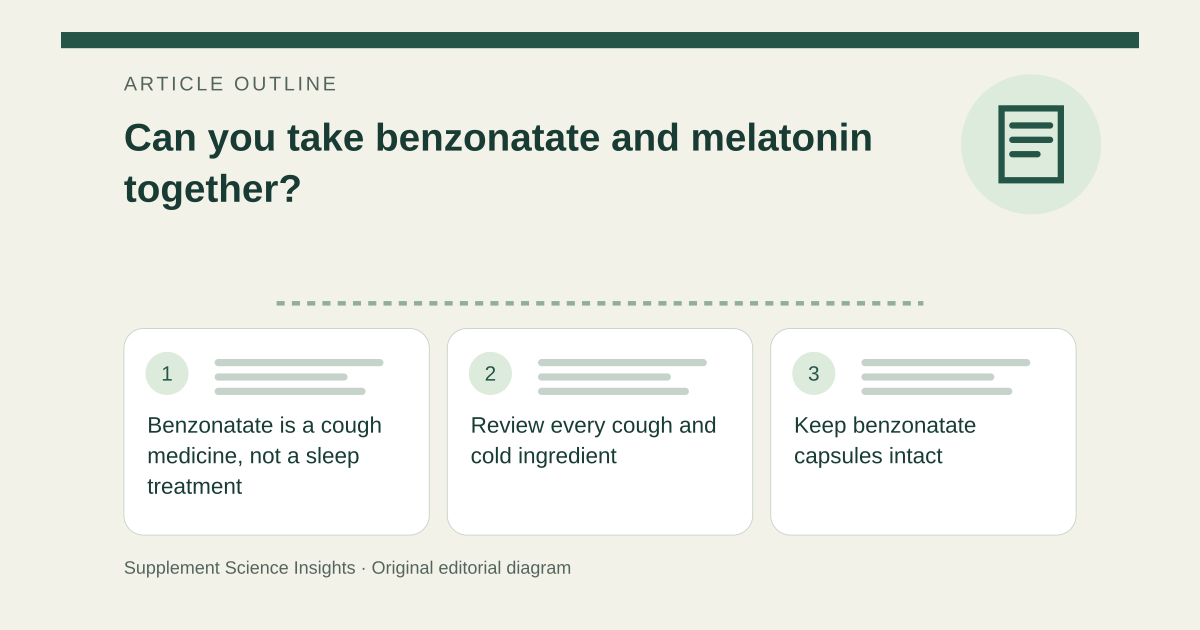
Benzonatate is a cough medicine, not a sleep treatment
The DailyMed label describes suppression of the cough reflex and lists sedation, dizziness, confusion and hallucinations among potential adverse effects. Adding melatonin may increase practical impairment even when the medicines are being taken for different reasons. [1][2]
Review every cough and cold ingredient
Some people also use a nighttime cold product, antihistamine or opioid-containing medicine. These can complicate sedation risk. Give the pharmacist all product names and doses rather than asking only about the two ingredients on the front of the packages. [3][1]
Keep benzonatate capsules intact
The label instructs swallowing capsules whole. Chewing, crushing or dissolving them can numb the mouth and throat and cause choking. Accidental ingestion and overdose can become dangerous rapidly, especially in children; seek immediate medical advice rather than waiting for symptoms. [1]
Treat cough and sleep as separate problems
Imagine coughing prevents sleep and someone considers several sedating remedies. More sedation does not establish treatment of the cough’s cause. Use the prescribed cough regimen, review persistent symptoms and avoid driving when impaired rather than adding products until sleep occurs. [1][2]
| Item | Check |
|---|---|
| Benzonatate | Use only as prescribed |
| Capsule | Swallow whole |
| Other cold medicines | Identify overlapping sedatives |
| Melatonin | Review need and impairment |
Sources for this article
- Benzonatate Capsules, USP
Source consulted: 2026-09-21. This is a reference resource, not a claim that we conducted the studies or tested a product. - Common questions about melatonin - NHS
Source consulted: 2026-09-21. This is a reference resource, not a claim that we conducted the studies or tested a product. - Taking melatonin with other medicines and herbal supplements - NHS
Source consulted: 2026-09-21. This is a reference resource, not a claim that we conducted the studies or tested a product.