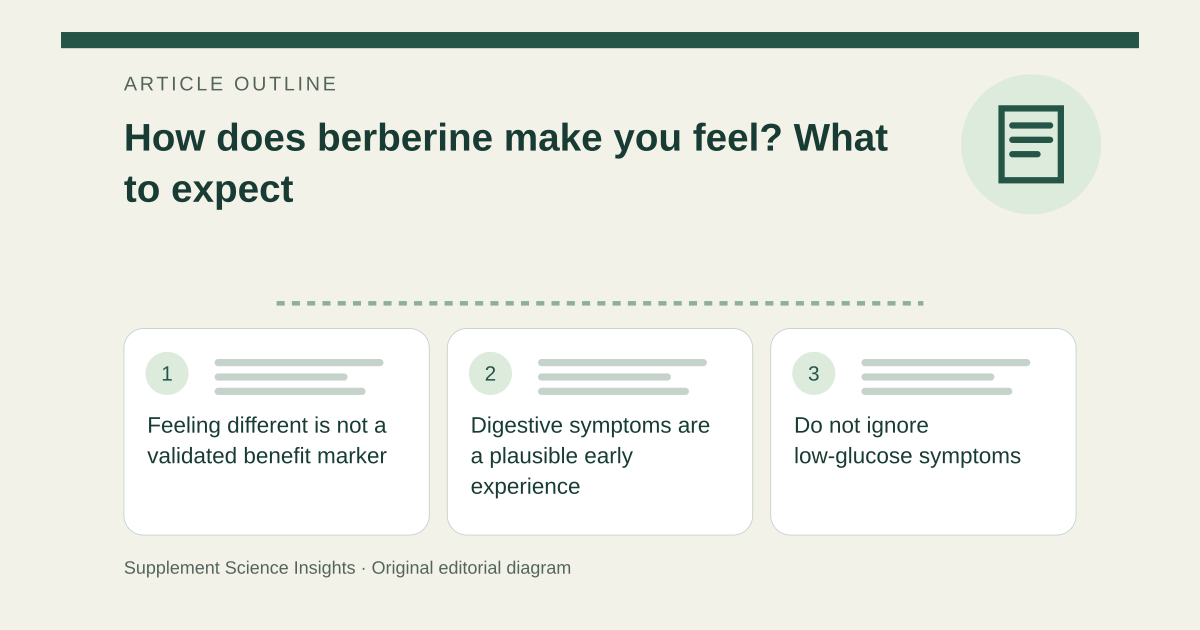
Feeling different is not a validated benefit marker
NCCIH describes uncertain weight-loss evidence and varying formulations. A burst of energy, reduced appetite or no sensation at all cannot by itself establish improved insulin sensitivity or fat loss. Effects should be judged against the intended outcome and the limits of the research. [1]
Digestive symptoms are a plausible early experience
Nausea, bloating, abdominal pain, constipation and diarrhea are reported adverse effects. They are not proof of detoxification or of beneficial bacteria being cleared. If symptoms are troublesome, review the supplement instead of increasing the amount to make it work faster. [1]
Do not ignore low-glucose symptoms
Berberine can complicate glucose-lowering treatment. If you have diabetes and become shaky, sweaty, confused or weak, check glucose if possible and follow the agreed hypoglycemia plan. Severe confusion, seizure or unconsciousness requires urgent help; never give food or drink to someone who cannot swallow safely. [2][3]
Use a defined outcome
Imagine someone feels nothing after starting a capsule. That does not establish failure, and nausea in another person does not establish success. Discuss whether there is a defensible reason to use it and which objective measure, if any, should be followed. [1]
| Experience | Interpretation |
|---|---|
| No noticeable sensation | Neither proof of benefit nor failure |
| Nausea or diarrhea | Possible adverse effect |
| Shaking and sweating with diabetes | Check glucose and follow care plan |
| Changed laboratory marker | Interpret in clinical context |
Sources for this article
- Berberine and Weight Loss: What You Need To Know | NCCIH
Source consulted: 2026-09-21. This is a reference resource, not a claim that we conducted the studies or tested a product. - Berberine-Drug Interactions: Mechanisms, Clinical Relevance and Risk Stratification—A Narrative Review - PMC
Source consulted: 2026-09-21. This is a reference resource, not a claim that we conducted the studies or tested a product. - Low blood sugar (hypoglycaemia) - NHS
Source consulted: 2026-09-21. This is a reference resource, not a claim that we conducted the studies or tested a product.