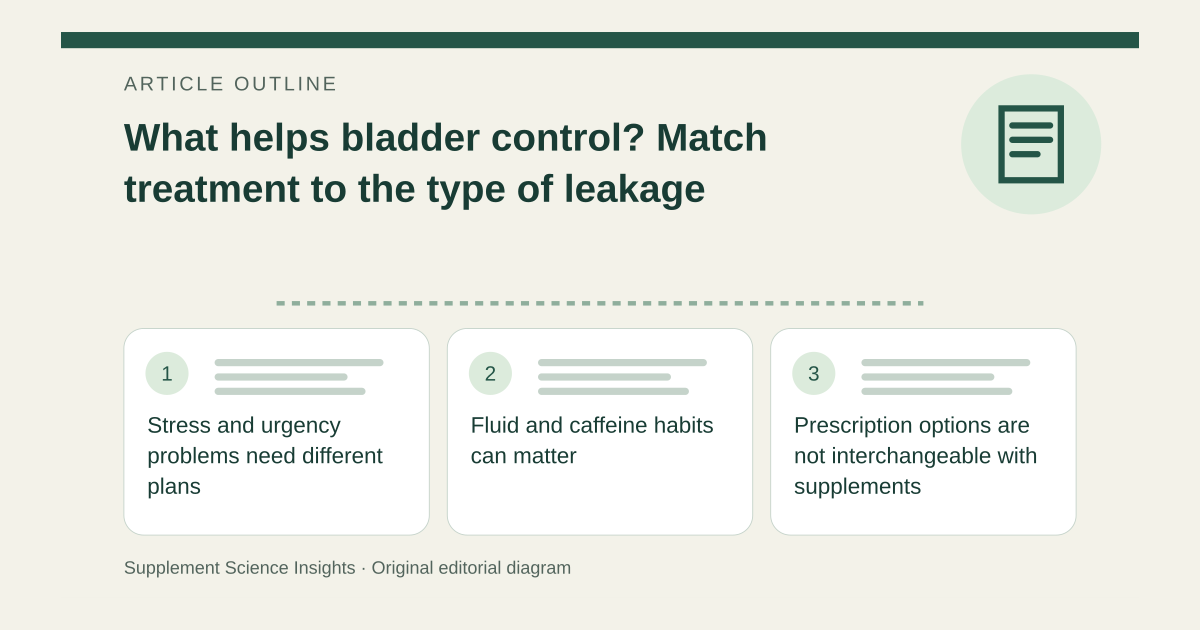
Stress and urgency problems need different plans
NHS guidance bases treatment on the type and severity of incontinence. Conservative options include pelvic-floor training, bladder training and lifestyle changes. A bladder-support blend cannot determine whether the problem is stress leakage, urgency or another condition. [1]
Fluid and caffeine habits can matter
NHS advises reviewing caffeine and fluid intake; both too much and too little fluid can worsen incontinence. Do not assume restricting drinks as much as possible is the solution. A clinician can help tailor changes to the symptom pattern and other health needs. [1]
Prescription options are not interchangeable with supplements
For urge incontinence, medication choices may include antimuscarinics or alternatives such as mirabegron or vibegron when appropriate. Selection depends on response and other conditions. These are clinical treatment decisions, not ingredients to imitate with an over-the-counter supplement. [1]
Use a symptom record to make the appointment useful
Imagine leakage happens with coughing on some days and with sudden urgency on others. Record those patterns and discuss both rather than picking a product from a general bladder-health claim. Ask what outcome the treatment should change and when to review it. [1][2]
| Finding | Next question |
|---|---|
| Leakage with exertion | Would pelvic-floor assessment help? |
| Urgency-related leakage | Is bladder training appropriate? |
| Persistent symptoms | What further treatment fits the diagnosis? |
Sources for this article
- Urinary incontinence - Non-surgical treatment - NHS
Source consulted: 2026-09-20. This is a reference resource, not a claim that we conducted the studies or tested a product. - Dietary Supplements: What You Need to Know
Source consulted: 2026-09-20. This is a reference resource, not a claim that we conducted the studies or tested a product.