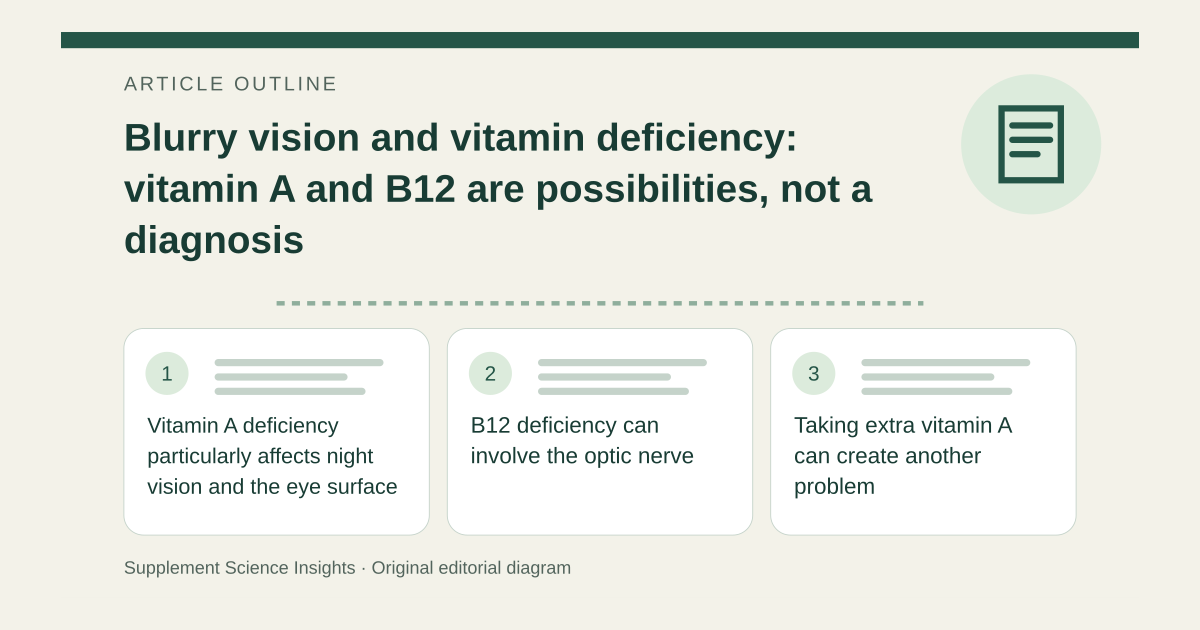
Vitamin A deficiency particularly affects night vision and the eye surface
NIH ODS describes night blindness as an early sign of xerophthalmia due to vitamin A deficiency, with more severe disease capable of damaging the cornea. These are clinically significant problems, not a reason to label every episode of blurry vision as low vitamin A. [1]
B12 deficiency can involve the optic nerve
NICE lists blurred vision, optic atrophy and visual-field loss among possible B12-related signs. Clinicians consider those findings with history, risk factors and testing. A normal-looking diet or a single symptom is not enough to confirm or exclude the diagnosis. [2]
Taking extra vitamin A can create another problem
Excess preformed vitamin A can accumulate and cause toxicity; blurred vision can occur with acute excess. Escalating vitamin A in response to an unexplained eye symptom can therefore be the wrong action. Treatment of a confirmed deficiency is different from unsupervised high-dose use. [1]
The urgency comes from the symptom pattern
Vision changes accompanied by eye pain, redness or marked light sensitivity need prompt eye assessment, with emergency care for concerning acute changes. Do not assume contact-lens discomfort or sudden blurring is nutritional and wait for vitamins to help. [3]
Bring relevant history without making the diagnosis yourself
Imagine someone with an absorption disorder develops blurring. Tell the clinician about the disorder, medicines, supplements and other symptoms, while obtaining an eye examination. Nutrient testing may be relevant, but it does not replace evaluation of the eye itself. [2][1]
| Information | Reason |
|---|---|
| Timing and eye symptoms | Assess urgency and possible causes |
| Diet and absorption history | Assess deficiency risk |
| Current vitamin doses | Identify possible excess as well as shortage |
Sources for this article
- Vitamin A and Carotenoids - Health Professional Fact Sheet
Source consulted: 2026-09-21. This is a reference resource, not a claim that we conducted the studies or tested a product. - Recommendations | Vitamin B12 deficiency in over 16s: diagnosis and management | Guidance | NICE
Source consulted: 2026-09-21. This is a reference resource, not a claim that we conducted the studies or tested a product. - NHS: Dry eyes
Source consulted: 2026-09-21. This is a reference resource, not a claim that we conducted the studies or tested a product.