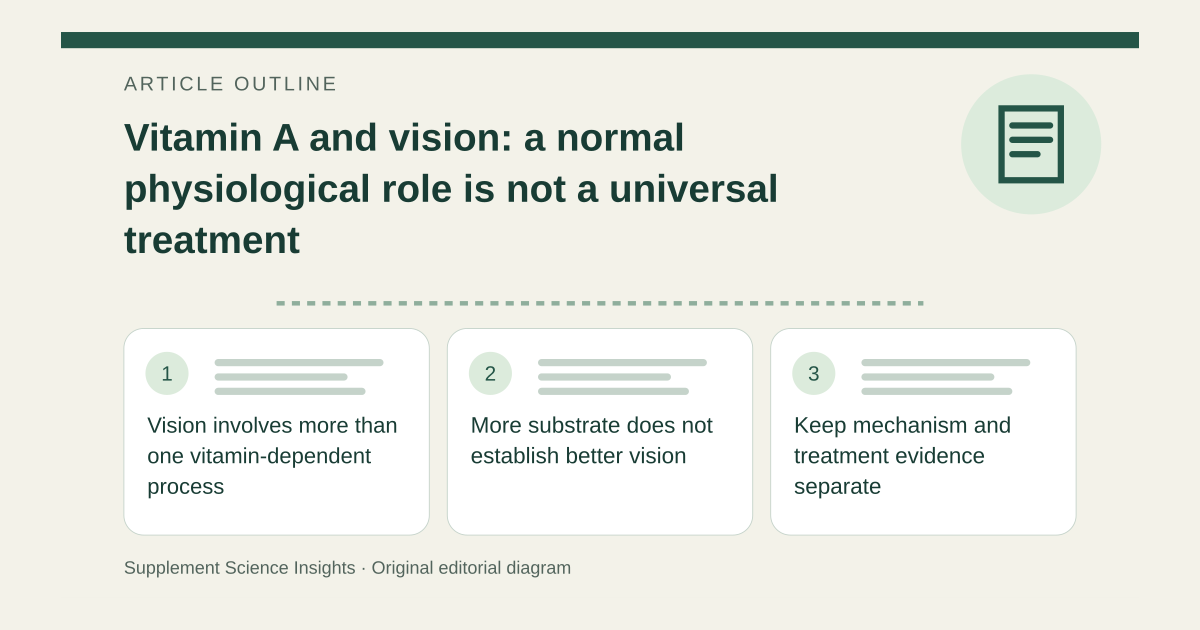
Vision involves more than one vitamin-dependent process
ODS describes vitamin A as essential to rhodopsin, a light-sensitive protein in the retina. It also supports normal differentiation and function of the conjunctival membranes and cornea. These functions explain why adequate vitamin A nutrition matters for eye health. [1]
They do not identify the cause of an individual’s visual symptoms. A change in vision cannot be diagnosed as a vitamin deficiency simply because the nutrient has a role in the eye. [1]
More substrate does not establish better vision
A deficiency-related problem and a separate eye disease require different assessments. The normal physiological explanation is not evidence that additional vitamin A benefits someone who already has adequate status. [1]
Preformed vitamin A can accumulate, and excessive exposure can cause harm, including blurred vision in acute toxicity. That makes escalating a supplement in response to visual symptoms particularly unreliable. New or concerning vision changes warrant clinical assessment. [1]
Keep mechanism and treatment evidence separate
Imagine a product cites vitamin A’s role in rhodopsin to promise sharper vision for everyone. The mechanism supports essential nutrition, but it does not establish the advertised result in adequately nourished users.
| Detail | Meaning |
|---|---|
| Rhodopsin role | Normal physiology |
| Poor vision | Not a deficiency diagnosis |
| More vitamin A | Can be harmful |
Sources for this article
- NIH ODS: Vitamin A and Carotenoids
Source consulted: 2026-09-17. This is a reference resource, not a claim that we conducted the studies or tested a product.