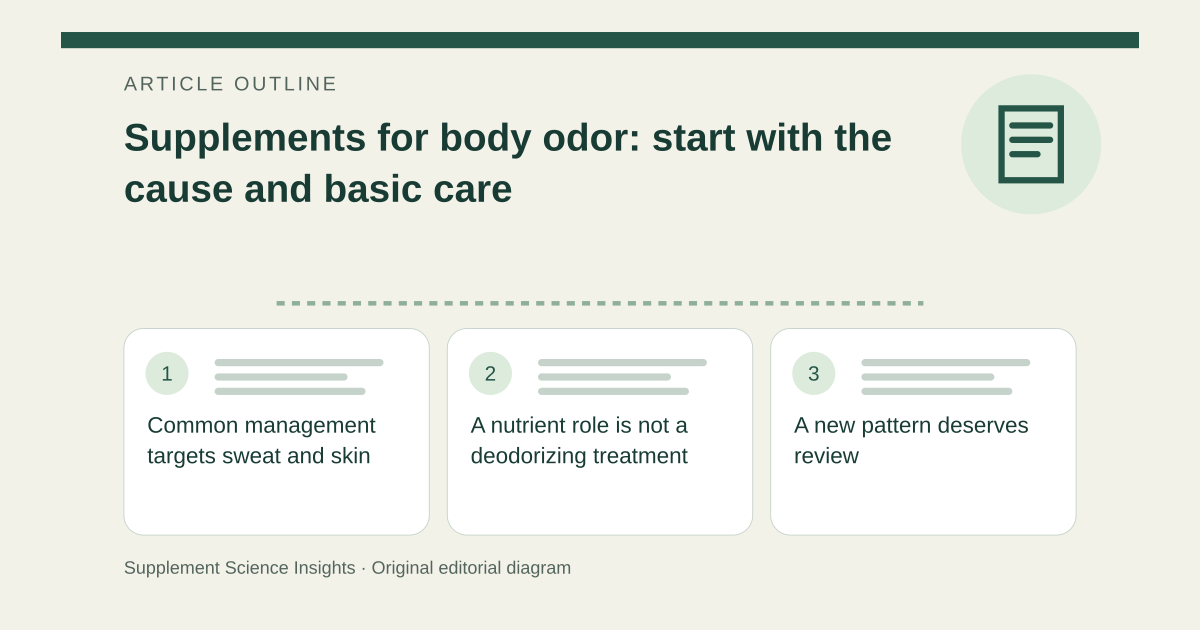
Common management targets sweat and skin
NHS recommends washing and drying affected areas, using deodorants or antiperspirants, and changing clothes regularly. A pharmacist can advise on stronger antiperspirants and suitable skin products. These approaches address the immediate odor and sweating problem. [1]
A nutrient role is not a deodorizing treatment
Zinc is essential, but that does not establish that extra zinc removes unexplained body odor. ODS warns that excessive zinc can interfere with copper status. Adding a supplement without identifying the problem can introduce an avoidable exposure without a demonstrated personal benefit. [2]
A new pattern deserves review
Imagine odor changes substantially despite usual hygiene, or sweating suddenly increases. NHS advises medical review when self-care does not help, the odor changes or sweating increases unexpectedly. Bring medicines and supplements to that review; do not use a deodorizing supplement to cover a persistent unexplained change. [1]
| Observation | Appropriate distinction |
|---|---|
| Usual odor after sweating | Start with washing, drying and antiperspirant |
| Extra zinc | Not a proven default deodorant |
| New odor or sweating pattern | Assess the change |
Sources for this article
- Body odour - NHS
Source consulted: 2026-09-20. This is a reference resource, not a claim that we conducted the studies or tested a product. - Zinc - Health Professional Fact Sheet
Source consulted: 2026-09-20. This is a reference resource, not a claim that we conducted the studies or tested a product.