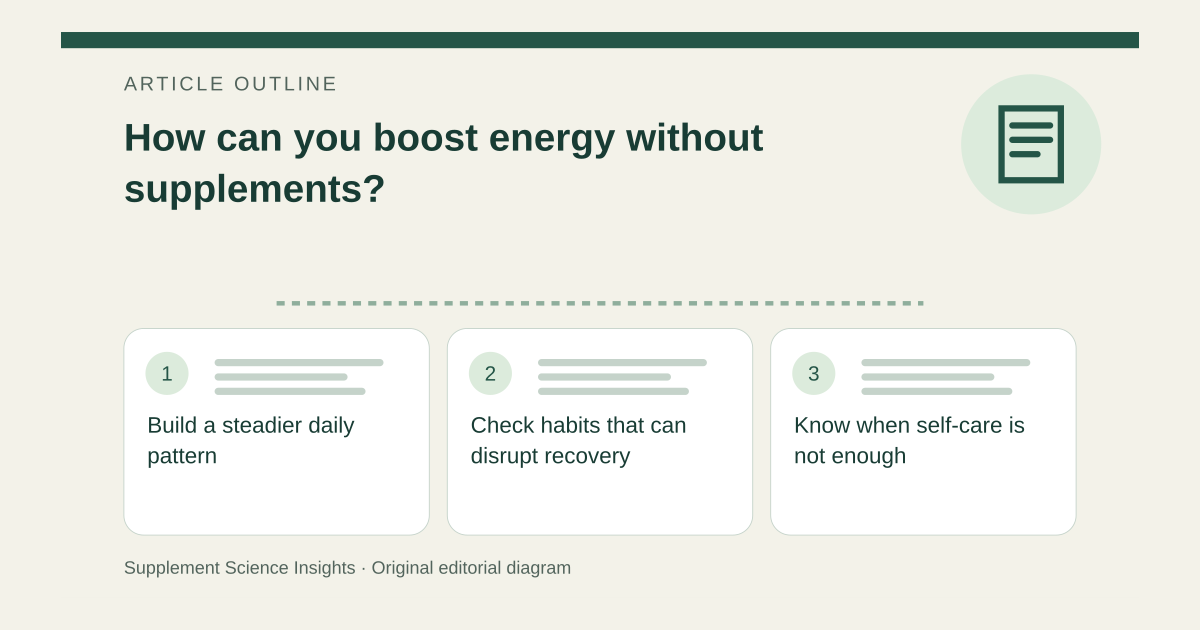
Build a steadier daily pattern
NHS guidance recommends regular meals and snacks, consistent sleep times and gradual physical activity. Start at a manageable level rather than forcing intense exercise through exhaustion. A short walk may help some people, while persistent or disproportionate fatigue calls for an individualized assessment. [1]
Check habits that can disrupt recovery
The NHS also advises considering stress, alcohol, caffeine and hydration. A stimulant can mask tiredness without correcting its cause and may interfere with later sleep. Choose a realistic routine that supports rest and adequate nutrition instead of repeatedly extending the day with extra caffeine. [1]
Know when self-care is not enough
Imagine fatigue continues despite sufficient sleep and regular meals, or begins to interfere with everyday activities. Arrange a clinical review rather than assuming poor motivation. The cause may require a different approach, and a food or sleep adjustment should not delay investigation of persistent unexplained symptoms. [1]
| Situation | Appropriate distinction |
|---|---|
| A symptom | Identify its cause |
| A marketing promise | Check the measured outcome |
| A treatment change | Review suitability and follow-up |
Sources for this article
- Self-help tips to fight tiredness - NHS
Source consulted: 2026-09-21. This is a reference resource, not a claim that we conducted the studies or tested a product.