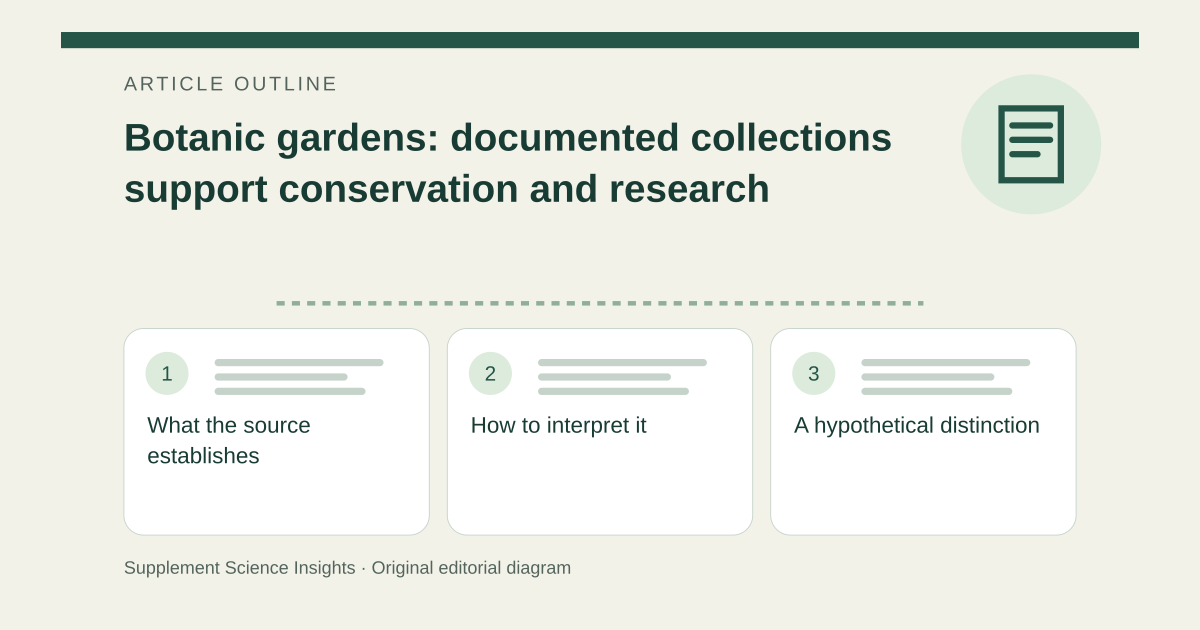
What the source establishes
Botanic Gardens Conservation International describes institutions maintaining documented living-plant collections. Their activities can include taxonomy, propagation research, public education and protection of threatened plants. [1]
Living collections and seed banks can preserve material for conservation and restoration. Horticultural expertise helps keep difficult species alive, while records connect plants with identity and collection history. [1]
How to interpret it
A garden display alone does not prove that every conservation goal has been achieved. The scope and records of a particular institution matter, and cultivated collections complement rather than automatically replace habitat protection. A plant’s presence in a medicinal collection is not evidence of clinical efficacy. [1]
A hypothetical distinction
Imagine two gardens grow the same rare species. Records of origin, identity and propagation can determine how useful each collection is for a conservation project.
| Detail | Interpretation |
|---|---|
| Living plants | Collection material |
| Documentation | Scientific context |
| Public display | One of several purposes |
Sources for this article
- Botanic Gardens and Plant Conservation | Botanic Gardens Conservation International
Source consulted: 2026-09-19. This is a reference resource, not a claim that we conducted the studies or tested a product.