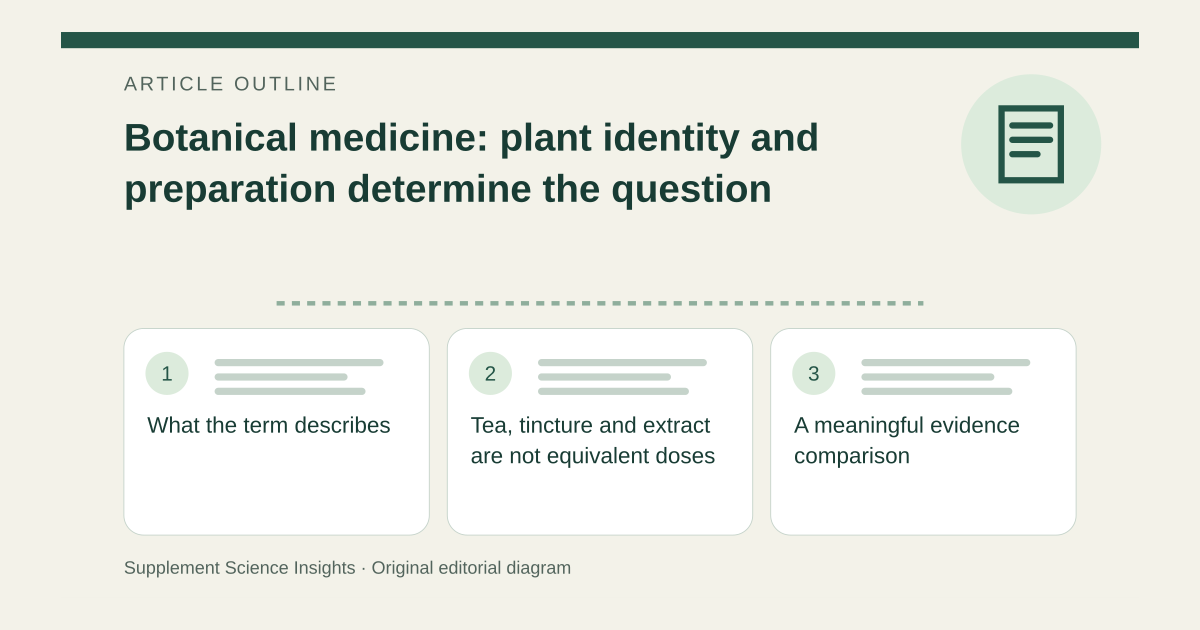
What the term describes
ODS defines botanicals as plants or plant parts valued for properties such as flavor, scent or medicinal use. Herbal products and phytomedicines are related terms. A species name and plant part help identify the material, but do not alone describe the strength or composition of the finished preparation. [1]
Tea, tincture and extract are not equivalent doses
Different solvents and preparation methods extract different constituents. A tea, alcohol-containing tincture and dried extract from the same plant can therefore differ substantially. A standardized marker can help describe consistency without proving that the marker causes a clinical benefit or that every batch is effective. [1]
A meaningful evidence comparison
Imagine a trial tests a defined root extract, while a retail product contains a tea made from leaves of the same species. The shared plant name does not make the interventions equivalent. Compare plant part, extraction, dose, population and outcome before transferring a claim, and review potential medicine interactions for the exact product. [1]
| Hypothetical matching detail | Why it matters |
|---|---|
| Species and plant part | Material identity |
| Extraction and declared strength | Preparation composition |
| Clinical population and outcome | Scope of any benefit claim |
Sources for this article
- Botanical Dietary Supplements Background Information - Consumer
Source consulted: 2026-09-20. This is a reference resource, not a claim that we conducted the studies or tested a product.