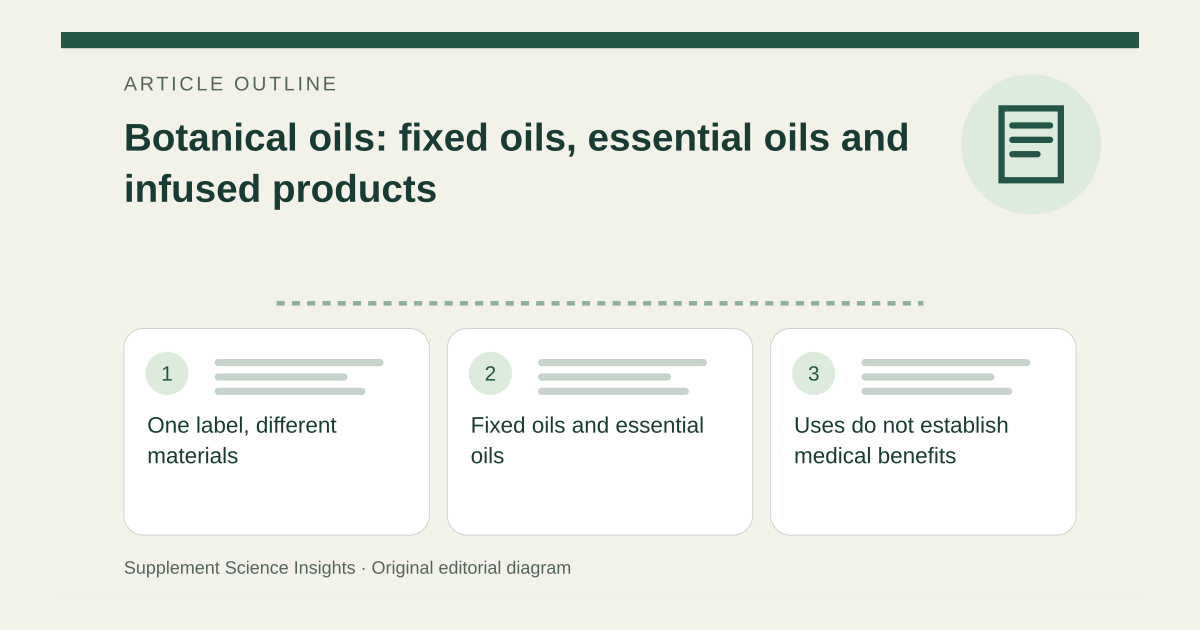
One label, different materials
Botanical oil is a broad description for a plant-derived oil or oil-based product. It may refer to a food oil rich in fatty acids, an essential oil containing volatile aromatic compounds, or a preparation in which plant material has been infused into another oil. [1][2][3]
Those categories differ in composition and intended use. The plant name alone is insufficient: the plant part, extraction method, concentration and carrier can all change what the bottle contains. A culinary oil and a concentrated fragrance preparation should not be substituted for one another. [1][2][3]
Fixed oils and essential oils
Food oils such as flaxseed, soybean and canola oils supply fatty acids. Essential oils are concentrated mixtures of volatile plant compounds, commonly obtained through distillation or other extraction methods. The word essential in essential oil does not mean the mixture is an essential dietary nutrient. [1][2]
An infused product adds another distinction: its carrier oil and the substances transferred from plant material both contribute to the final composition. The amount and identity of those transferred substances cannot be inferred simply from a photograph of the plant on the label. [1][2]
Uses do not establish medical benefits
Some botanical oils are foods; others are used for fragrance, massage or skin-care formulations. NCCIH describes aromatherapy as an approach using essential oils and notes that evidence varies by condition. A pleasant smell or a moisturizing effect is not proof that an oil treats a disease. [3][4]
The route matters. FDA emphasizes that plant-derived ingredients can be irritating, allergenic or toxic, and that some citrus oils can harm skin exposed to sunlight. Natural origin is not a guarantee of safety. Use the actual product's directions rather than improvising ingestion or applying an undiluted concentrate. [3][4]
A hypothetical shelf comparison
Imagine three bottles labeled sunflower cooking oil, lavender essential oil and a lavender-infused massage oil. Their shared botanical origin does not make them substitutes. Identify whether the product is intended as food, a concentrated aromatic ingredient or a finished topical preparation before interpreting any benefit claim. [1][3]
| Description | Key distinction |
|---|---|
| Plant food oil | A dietary fat source when sold for food use |
| Essential oil | Concentrated volatile compounds |
| Infused oil | Plant-derived material within a carrier oil |
Sources for this article
- essential oil (CHEBI:83630)
Source consulted: 2026-09-20. This is a reference resource, not a claim that we conducted the studies or tested a product. - Omega-3 Fatty Acids - Health Professional Fact Sheet
Source consulted: 2026-09-20. This is a reference resource, not a claim that we conducted the studies or tested a product. - Aromatherapy | FDA
Source consulted: 2026-09-20. This is a reference resource, not a claim that we conducted the studies or tested a product. - NCCIH — Aromatherapy
Source consulted: 2026-09-20. This is a reference resource, not a claim that we conducted the studies or tested a product.