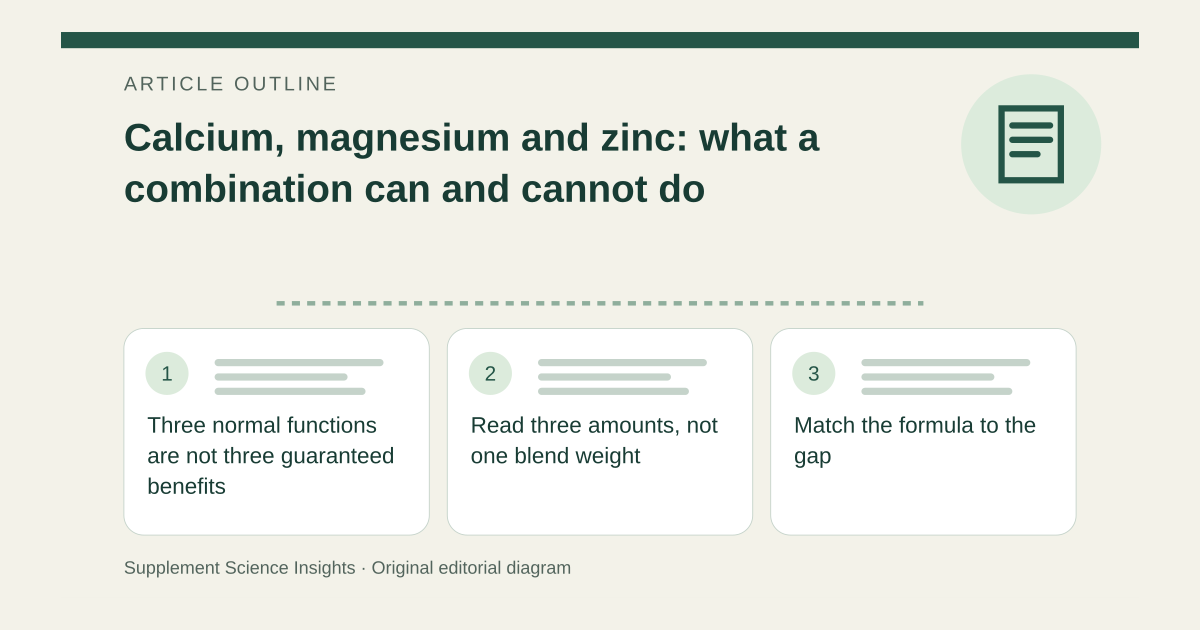
Three normal functions are not three guaranteed benefits
Calcium contributes to bones and cell signaling, magnesium to many enzymatic and neuromuscular processes, and zinc to immune function and other tasks. These are normal nutrient roles. Whether supplementation improves an outcome depends on the starting intake, condition, amount and relevant evidence. [1][2][3]
Read three amounts, not one blend weight
A front label may emphasize the combined product, but each elemental mineral amount matters. Calcium and magnesium requirements are not supplied in equal quantities simply because both appear in the name. Zinc is a trace mineral, and taking high amounts over time can adversely affect copper status. [1][2][3]
Match the formula to the gap
Imagine dietary review identifies a calcium shortfall but adequate zinc intake. A large zinc addition is not automatically useful just because it is bundled with calcium. Compare the full formula, overlapping products and medicines before choosing. A combination can be convenient when it fits several needs, but convenience is not proof of a special therapeutic effect. [1][3]
| Illustrative situation | Relevant distinction |
|---|---|
| Calcium shortfall | Assess calcium contribution |
| Adequate zinc already | More is not automatically useful |
| Three-mineral marketing | Not evidence of three clinical benefits |
Sources for this article
- Calcium - Health Professional Fact Sheet
Source consulted: 2026-09-20. This is a reference resource, not a claim that we conducted the studies or tested a product. - Magnesium - Health Professional Fact Sheet
Source consulted: 2026-09-20. This is a reference resource, not a claim that we conducted the studies or tested a product. - Zinc - Health Professional Fact Sheet
Source consulted: 2026-09-20. This is a reference resource, not a claim that we conducted the studies or tested a product.