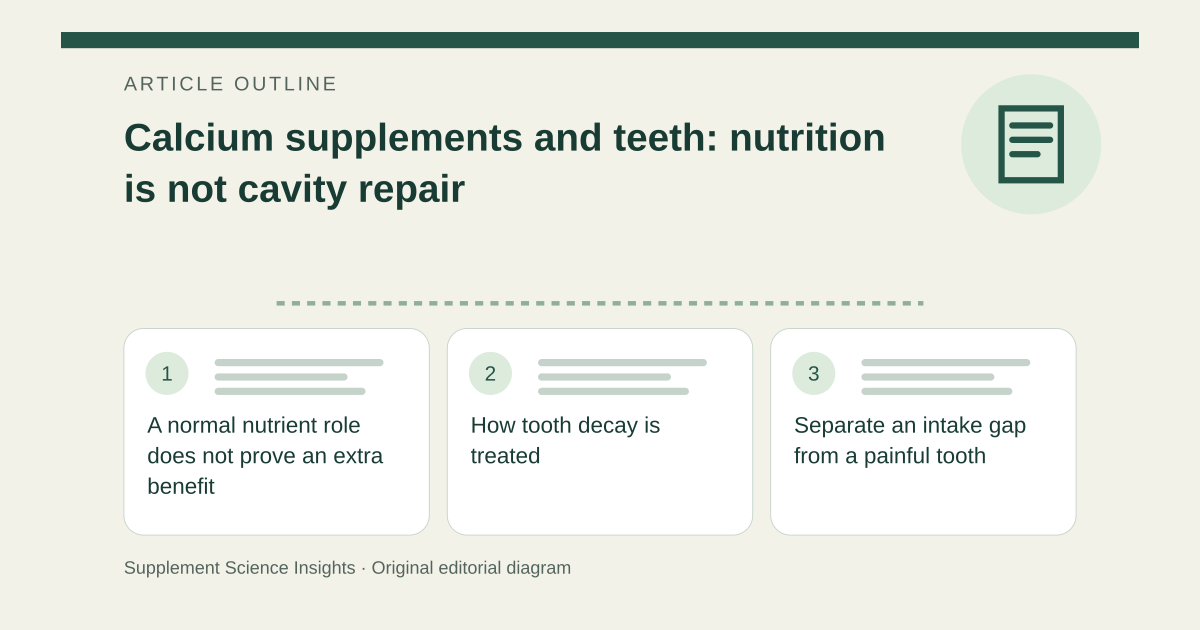
A normal nutrient role does not prove an extra benefit
Calcium forms part of the mineral structure of teeth. Adequate nutrition matters, but the fact that a tissue contains a mineral does not show that additional supplements will repair damage when intake is already sufficient. [1][2]
ODS explains calcium’s structural role. It should not be read as evidence that an oral calcium tablet can fill a cavity or replace dental assessment. The supplement question and the tooth-treatment question need separate answers. [1][2]
How tooth decay is treated
NIDCR describes decay as a process in which acids produced by mouth bacteria cause enamel to lose minerals. Early damage can sometimes be stopped or reversed before a cavity forms, with saliva minerals and fluoride playing a role. [2]
Once a cavity has formed, dentists commonly remove the decayed tissue and restore the tooth with a filling. Swallowing calcium is not the treatment described for that structural damage. Tooth pain or visible damage should not be managed by waiting to see whether a supplement helps. [2]
Separate an intake gap from a painful tooth
Imagine someone who avoids dairy notices tooth sensitivity and assumes they need a calcium supplement. Their diet may merit a calcium review, but sensitivity does not identify a calcium deficiency or establish the cause of the dental problem.
A dental examination addresses the tooth, while a food review addresses nutrient intake. Either assessment can be useful without pretending the two are interchangeable.
| Observation | Interpretation |
|---|---|
| Limited calcium foods | Review nutritional intake |
| Tooth sensitivity | Arrange dental assessment |
| A formed cavity | Requires dental treatment, not a calcium claim |
Use measures directed at decay
NIDCR recommends brushing twice daily with fluoride toothpaste, cleaning between teeth, limiting frequent sugary foods and drinks, and regular dental care. These measures address oral hygiene and the conditions that drive decay. [2][1]
If food intake does not meet calcium needs, a clinician or dietitian can help evaluate an appropriate adjustment. That nutritional plan should complement dental care rather than be advertised as a way to regrow a damaged tooth. [2][1]
Sources for this article
- NIH ODS — Calcium: Health Professional Fact Sheet
Source consulted: 2026-09-17. This is a reference resource, not a claim that we conducted the studies or tested a product. - NIDCR — Tooth Decay
Source consulted: 2026-09-17. This is a reference resource, not a claim that we conducted the studies or tested a product.