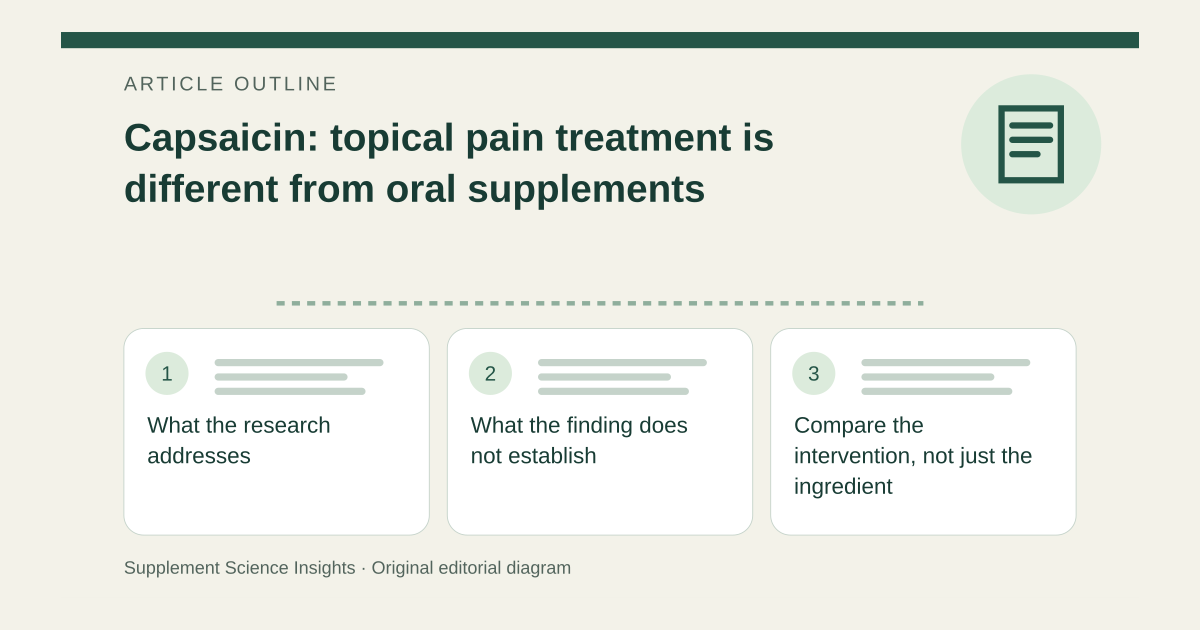
What the research addresses
Capsaicin is a constituent of chili peppers used in topical pain products and some oral supplements. MSK describes evidence for specific topical uses, including high-concentration patches for selected nerve-pain conditions. That evidence does not establish a benefit from swallowed capsules for weight loss or circulation. [1]
What the finding does not establish
An over-the-counter cream and a high-concentration medical patch are not interchangeable. Research for one pain diagnosis also cannot be assumed to apply to every other cause of pain. [1]
Compare the intervention, not just the ingredient
Suppose an advertisement for an oral capsule cites a successful patch study. The delivery route, concentration and intended outcome have all changed. A shared active ingredient does not repair those mismatches. To support the capsule's claim, the evidence would need to address the capsule's actual use.
Even within topical products, identify the condition being treated and how success was measured. A reduction in one form of nerve pain is not a general promise that any painful condition will improve. This approach makes a useful evidence match possible without pretending every formulation has the same role.
| Hypothetical finding or choice | What it means |
|---|---|
| A clinical patch study | Evidence for that patch and condition |
| An oral supplement advertisement | A different route and exposure |
| A stronger formulation | Not automatically a better or safer choice |
Safety and treatment considerations
Capsaicin can irritate eyes, mucous membranes and damaged skin. Burning and dermatitis occur, and serious application-site burns have been reported. Stop use and seek medical attention for pain, swelling or blistering after application. Follow product-specific instructions; higher-concentration treatments require appropriate clinical guidance. [1]
A practical next step
This article does not select a product strength or recommend a home-made preparation. Persistent pain deserves an assessment that identifies its cause and an appropriate treatment rather than escalating a topical product by guesswork.
Sources for this article
- Memorial Sloan Kettering Cancer Center — Capsaicin
Source consulted: 2026-09-17. This is a reference resource, not a claim that we conducted the studies or tested a product.