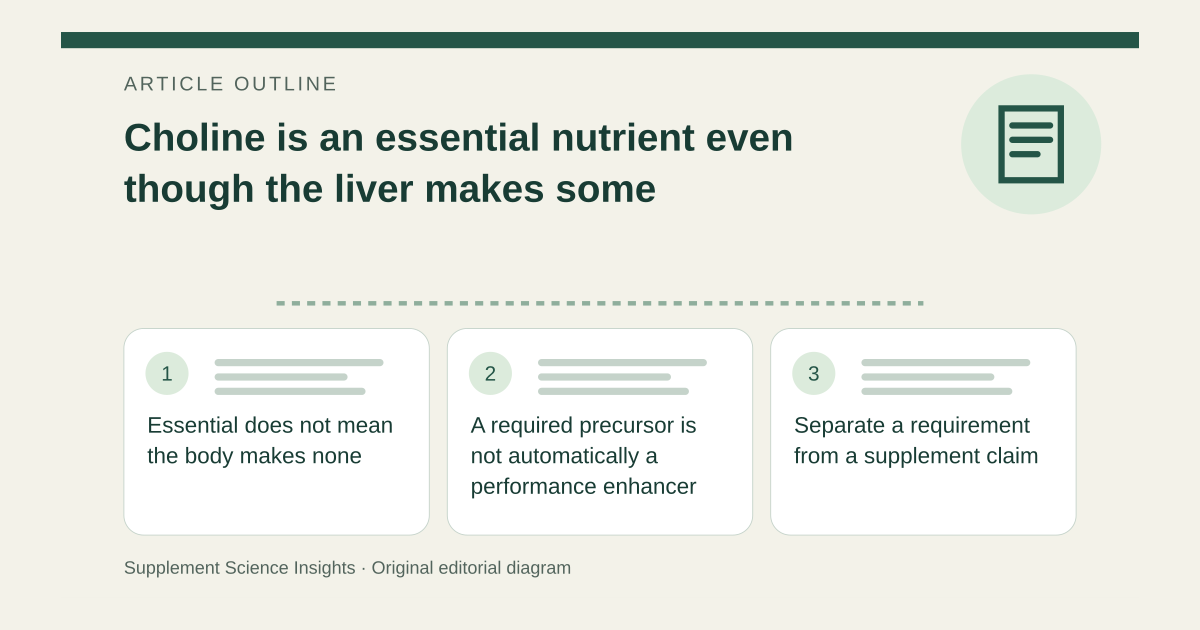
Essential does not mean the body makes none
ODS describes choline as an essential nutrient. The liver can produce it, primarily in phosphatidylcholine, but this endogenous production is insufficient to meet human needs. Food therefore remains an important source even when the synthetic pathway is functioning. [1]
Choline contributes to phosphatidylcholine and sphingomyelin, components of cell membranes, and supplies methyl groups used in metabolism. It is also needed to make acetylcholine, a neurotransmitter involved in memory, muscle control and other nervous-system functions. These are distinct biological roles rather than interchangeable marketing claims. [1]
A required precursor is not automatically a performance enhancer
The need for choline to make acetylcholine does not prove that adding more choline improves memory in a person with an adequate intake. A nutrient can be necessary for a process without the process improving indefinitely as intake rises. [1]
Choline deficiency can harm the liver and muscles, but the presence of symptoms does not diagnose it. Keep the nutritional requirement separate from an advertised treatment claim and assess the whole diet and clinical context. [1]
Separate a requirement from a supplement claim
Imagine a statement correctly says that choline is needed for cell membranes, then promises better memory from a capsule. The second statement requires clinical evidence beyond the first. The biological role alone does not establish a useful dose or an improved outcome.
| Item | Interpretation |
|---|---|
| Choline is required | Nutritional fact |
| The body makes some | Does not remove dietary need |
| Extra improves performance | Separate intervention claim |
Sources for this article
- NIH ODS: Choline — Health Professional Fact Sheet
Source consulted: 2026-09-17. This is a reference resource, not a claim that we conducted the studies or tested a product.