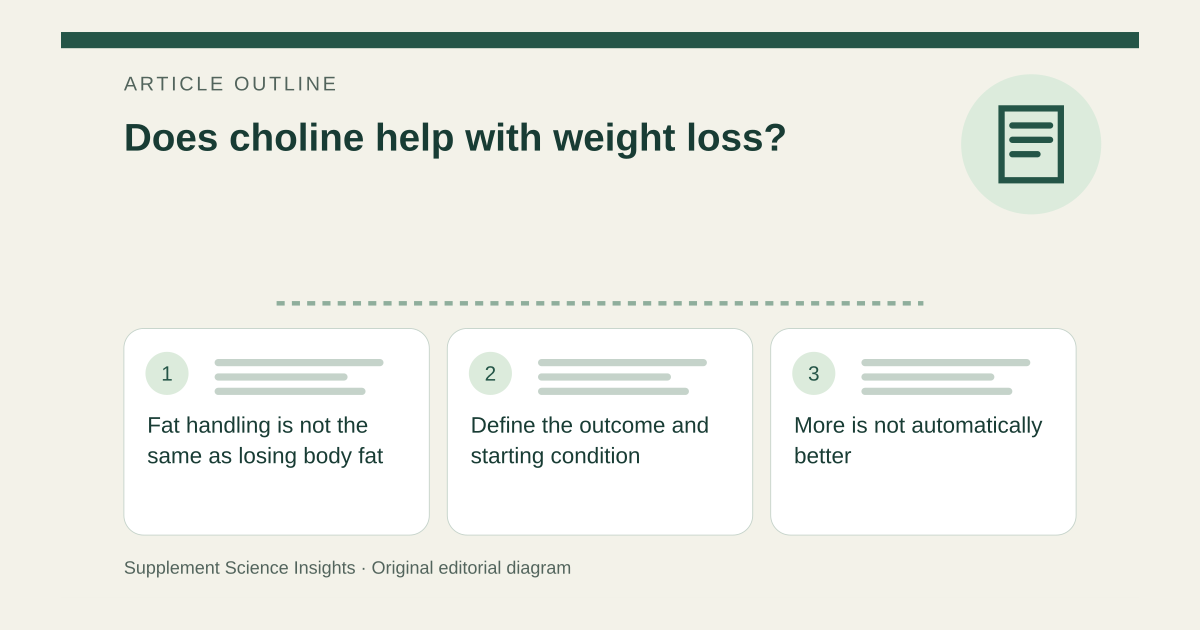
Fat handling is not the same as losing body fat
ODS describes choline roles in cell membranes and lipid transport. Choline deficiency can contribute to liver abnormalities, but treating deficiency-related problems does not establish that extra choline burns stored body fat. [1]
Define the outcome and starting condition
Body weight, waist measurements, liver fat and exercise performance are different outcomes. Evidence for one cannot automatically support the others, and people with deficiency differ from adequately nourished users. [1][2]
More is not automatically better
High choline intakes can cause fishy body odor, vomiting, sweating, low blood pressure and liver toxicity. The adult upper limit is a safety boundary, not a weight-loss target or recommended supplement serving. [1]
Evaluate the whole plan
Imagine a fat-burning blend contains choline and stimulants. A change in weight cannot be attributed to choline without an appropriate comparison, and all ingredients need review. Meet nutrient needs and use a sustainable weight-management plan rather than escalating the supplement. [1][2]
| Question | Interpretation |
|---|---|
| Lipid metabolism role | Not proven weight loss |
| Deficiency correction | Different clinical question |
| Liver-fat result | Not total body-fat result |
| High intake | Can cause harm |
Sources for this article
- Choline - Health Professional Fact Sheet
Source consulted: 2026-09-21. This is a reference resource, not a claim that we conducted the studies or tested a product. - Dietary Supplements: What You Need to Know
Source consulted: 2026-09-21. This is a reference resource, not a claim that we conducted the studies or tested a product.