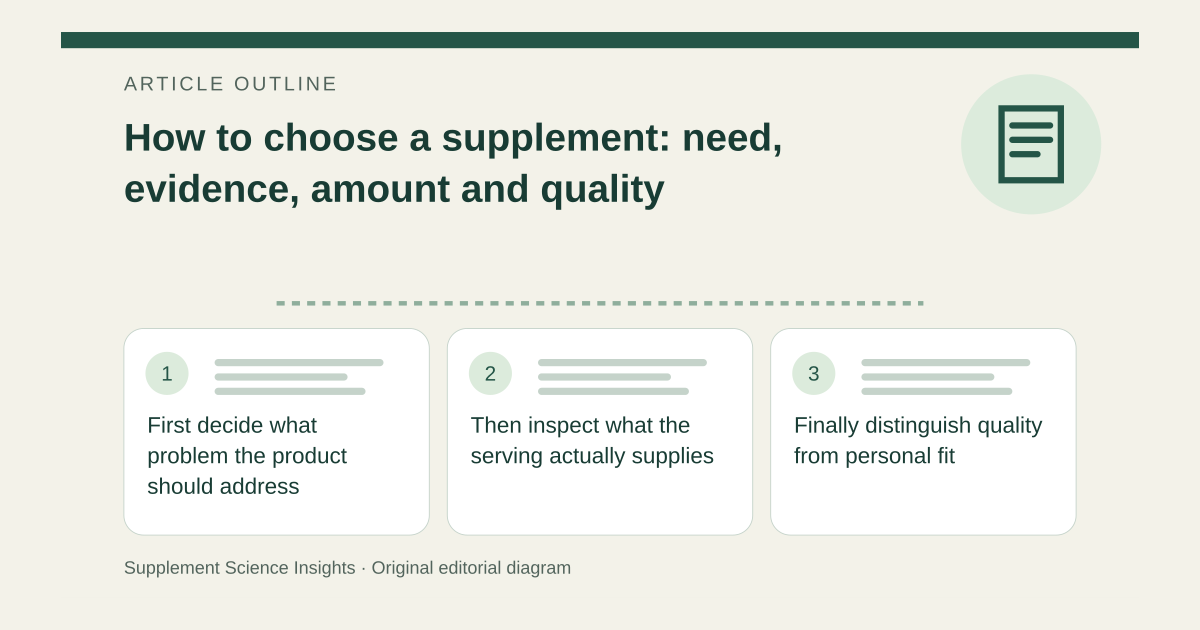
First decide what problem the product should address
Write a concrete purpose before comparing products. Filling a known dietary gap is a different task from pursuing a vague promise of vitality. Check reliable ingredient-specific information and whether it applies to your circumstances. If the need is unclear, a larger blend does not resolve the uncertainty. [1]
Then inspect what the serving actually supplies
Compare ingredient identity, form and amount per serving. Account for foods and other products, and check other ingredients relevant to allergies or dietary preferences. FDA’s labeling framework helps identify these details, but a compliant-looking label is not evidence that the product has a clinically meaningful effect. [2]
Finally distinguish quality from personal fit
Imagine two products have similar names but different amounts and additional herbs. They are not interchangeable without checking the full formula. Independent testing can address defined quality attributes; it does not replace an interaction review or prove benefit. Select a product only when its purpose and suitability remain clear after those checks. [1]
| Example | Interpretation |
|---|---|
| Purpose | Names the intended outcome |
| Formula | Defines what is taken |
| Quality and suitability | Separate checks are needed |
Sources for this article
- Dietary Supplements: What You Need to Know
Source consulted: 2026-09-20. This is a reference resource, not a claim that we conducted the studies or tested a product. - Questions and Answers on Dietary Supplements | FDA
Source consulted: 2026-09-20. This is a reference resource, not a claim that we conducted the studies or tested a product.