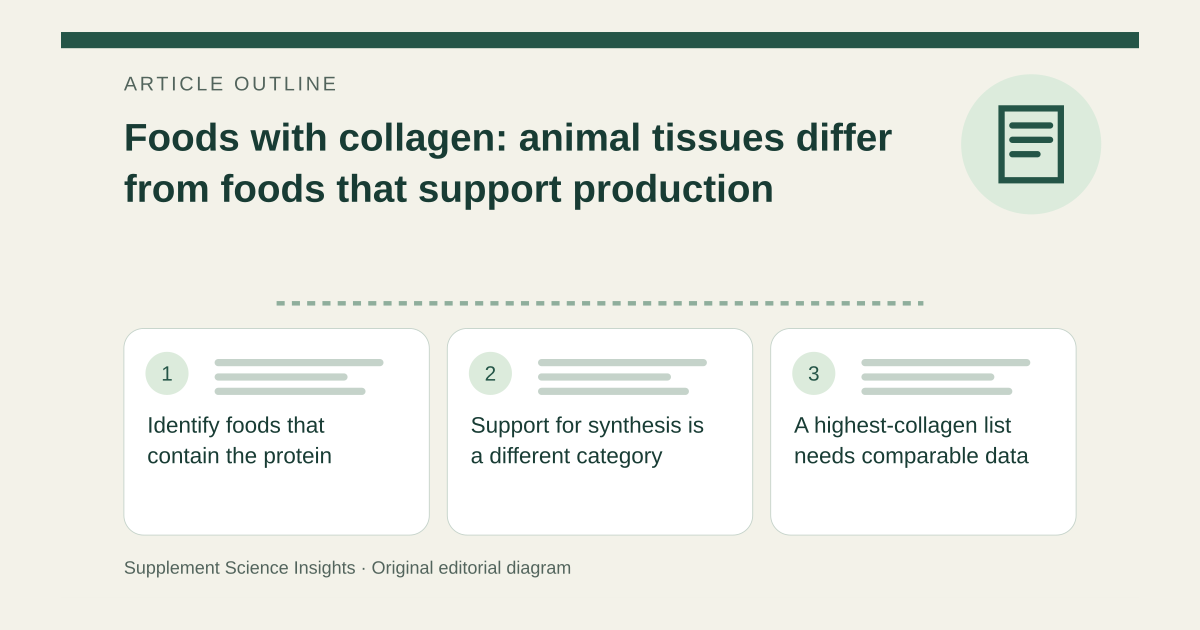
Identify foods that contain the protein
Harvard’s Nutrition Source identifies connective-tissue-rich cuts such as brisket and chuck, as well as fish bones and skin. Gelatin is derived from collagen. These examples identify sources; they do not establish a precise collagen amount in every prepared serving. [1]
Support for synthesis is a different category
The body uses protein-derived amino acids and nutrients such as vitamin C, zinc and copper to make collagen. Cleveland Clinic lists protein foods, fruits, vegetables, legumes, nuts and whole grains as sources of relevant building blocks. A pepper’s vitamin C supports synthesis; it does not mean the pepper contains collagen. [2]
A highest-collagen list needs comparable data
Cut, edible portion, cooking method and serving weight change the comparison. A list that ranks chicken skin, broth and steak without equivalent measurements offers a false precision. Total protein alone cannot identify the collagen fraction. [1][3]
Do not organize the entire diet around one protein
Choose a varied dietary pattern rather than treating collagen content as the sole measure of food quality. Harvard notes that collagen-rich red-meat cuts are not a reason for high red-meat intake. Other foods can contribute the nutrients needed for synthesis without containing collagen. [1][2]
Separate a collagen source from a nutrient partner
Imagine a meal combines fish and vegetables rich in vitamin C. The animal tissue and the vegetables contribute different things. Calling both collagen-rich hides that distinction; assessing the full meal is more useful than assigning an unsupported collagen score. [2][1]
| Claim or food | What it establishes |
|---|---|
| Animal connective tissue | Natural collagen source |
| Vitamin C-rich vegetables | Support synthesis, contain no natural collagen |
| Total protein | Not a collagen ranking |
Sources for this article
- Collagen • The Nutrition Source
Source consulted: 2026-09-20. This is a reference resource, not a claim that we conducted the studies or tested a product. - 18 Foods With Collagen Boosting Benefits
Source consulted: 2026-09-20. This is a reference resource, not a claim that we conducted the studies or tested a product. - How to Understand and Use the Nutrition Facts Label | FDA
Source consulted: 2026-09-20. This is a reference resource, not a claim that we conducted the studies or tested a product.