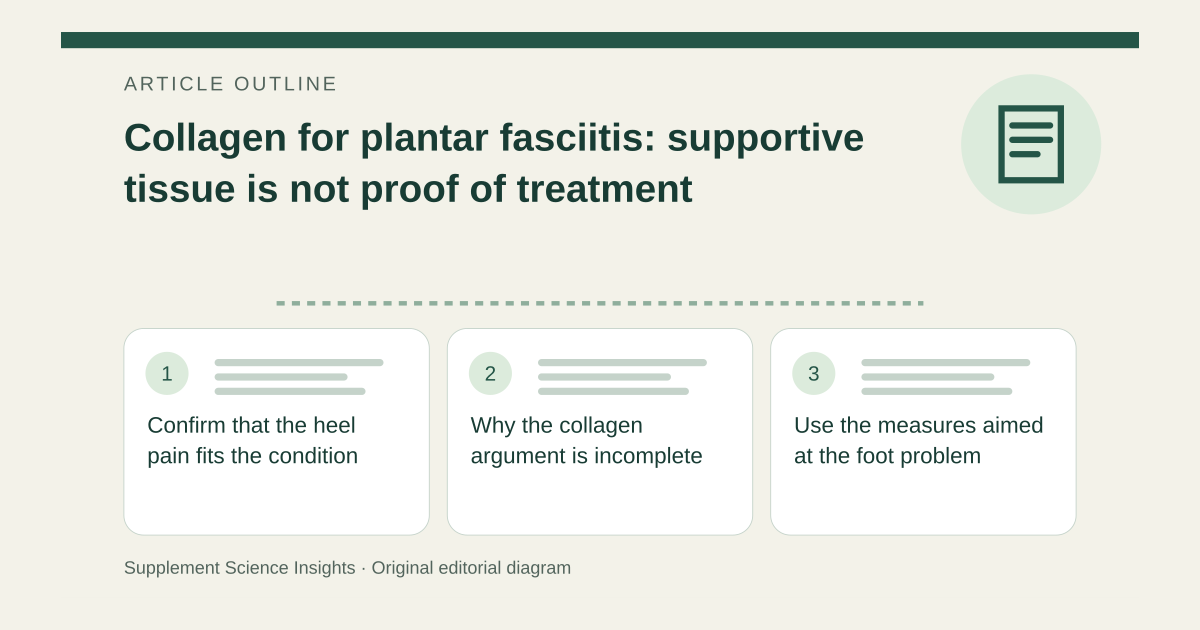
Confirm that the heel pain fits the condition
NHS describes pain around the heel and arch that is often worse with the first steps after rest and can worsen again with prolonged standing or walking. Tingling, loss of sensation, severe pain or diabetes-related foot pain need assessment rather than an assumed plantar-fasciitis diagnosis. [1]
Why the collagen argument is incomplete
Collagen is an important connective-tissue protein, and some supplement research concerns joint symptoms or exercise recovery. MSK’s summary does not establish a specific plantar-fasciitis benefit, dose or healing deadline. Findings in a different tendon or joint do not automatically answer this condition’s treatment question. [2]
Use the measures aimed at the foot problem
NHS suggests supportive, cushioned footwear, suitable insoles or heel pads, gentle stretching and reducing prolonged standing or walking that aggravates symptoms. Lower-impact activity such as swimming may help maintain activity without the same foot load. A physiotherapist can tailor the approach. [1]
Nutrition helps meet needs without guaranteeing faster repair
Adequate varied food and protein support normal tissue maintenance. A collagen supplement does not replace the rehabilitation plan or establish that more protein will shorten recovery. Review the full product if allergies, medicines or other health issues are relevant. [3][4]
Review persistent symptoms rather than waiting indefinitely
Imagine heel pain remains after two weeks of reasonable self-care. NHS advises clinical review, sooner if pain is severe, worsening or limits normal activity. A clinician can check the diagnosis and decide whether physiotherapy or other treatment is appropriate. [1]
| Area | Practical question |
|---|---|
| Diagnosis | Any atypical or concerning features? |
| Load and footwear | What aggravates or supports the foot? |
| Collagen | No established condition-specific regimen |
| Persistent pain | When to obtain assessment? |
Sources for this article
- Plantar fasciitis - NHS
Source consulted: 2026-09-21. This is a reference resource, not a claim that we conducted the studies or tested a product. - Collagen | Memorial Sloan Kettering Cancer Center
Source consulted: 2026-09-21. This is a reference resource, not a claim that we conducted the studies or tested a product. - Eating a balanced diet - NHS
Source consulted: 2026-09-21. This is a reference resource, not a claim that we conducted the studies or tested a product. - Dietary Supplements: What You Need to Know
Source consulted: 2026-09-21. This is a reference resource, not a claim that we conducted the studies or tested a product.