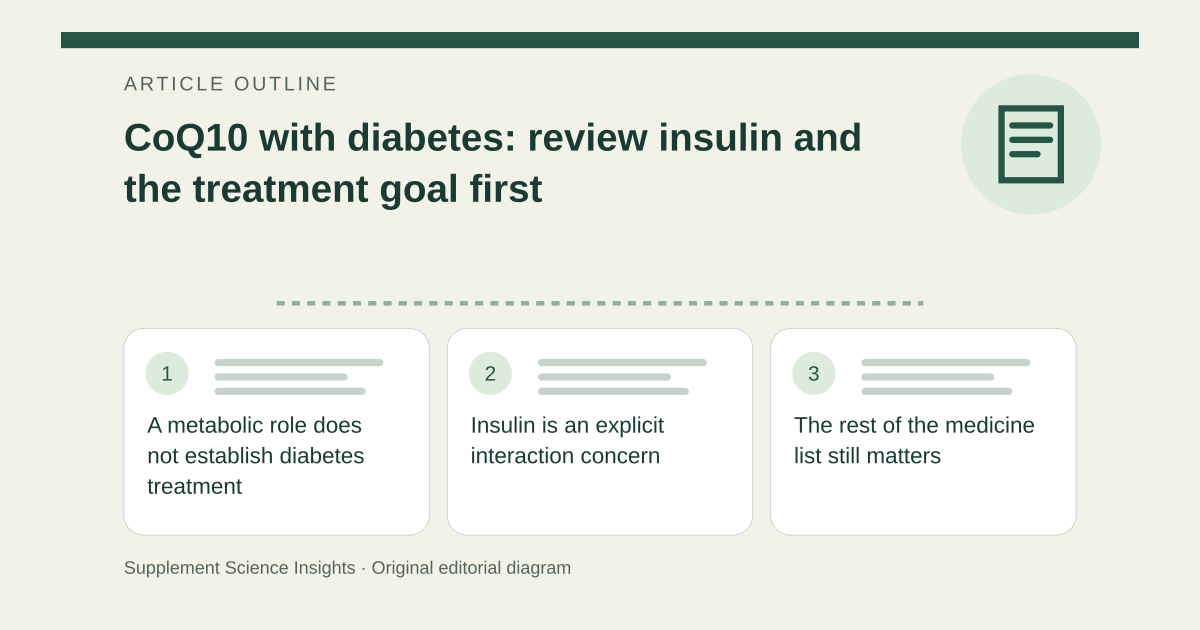
A metabolic role does not establish diabetes treatment
CoQ10 is involved in normal cell processes, but that is not proof that a supplement controls diabetes or can replace medication. A study measuring one laboratory outcome would also not establish all the clinical benefits a person with diabetes needs. [1][2]
Insulin is an explicit interaction concern
NCCIH advises that CoQ10 may interact with insulin. Review the product, amount and any co-ingredients with the treating team before starting it. Do not reduce or increase insulin on the basis of a supplement claim or an online dosing suggestion. [1]
The rest of the medicine list still matters
Warfarin and some cancer treatments are other named concerns. An interaction review must include the complete regimen, not just whether a bottle is labeled suitable for people with diabetes. A formulation containing added botanicals or nutrients creates additional questions. [1][3]
Plan monitoring around established care
Imagine a person using insulin wants CoQ10 for general energy. Clarify the fatigue and intended outcome, and ask what monitoring or review would be appropriate if the supplement is used. An unexplained symptom should not be assumed to be a CoQ10 deficiency. [1][3]
| Bring | Reason |
|---|---|
| Insulin and medicine list | Assess interactions |
| Exact supplement label | Check co-ingredients |
| Intended benefit | Avoid replacing established treatment |
Sources for this article
- Coenzyme Q10 | NCCIH
Source consulted: 2026-09-21. This is a reference resource, not a claim that we conducted the studies or tested a product. - Coenzyme Q10 - NCI
Source consulted: 2026-09-21. This is a reference resource, not a claim that we conducted the studies or tested a product. - Dietary Supplements: What You Need to Know
Source consulted: 2026-09-21. This is a reference resource, not a claim that we conducted the studies or tested a product.